
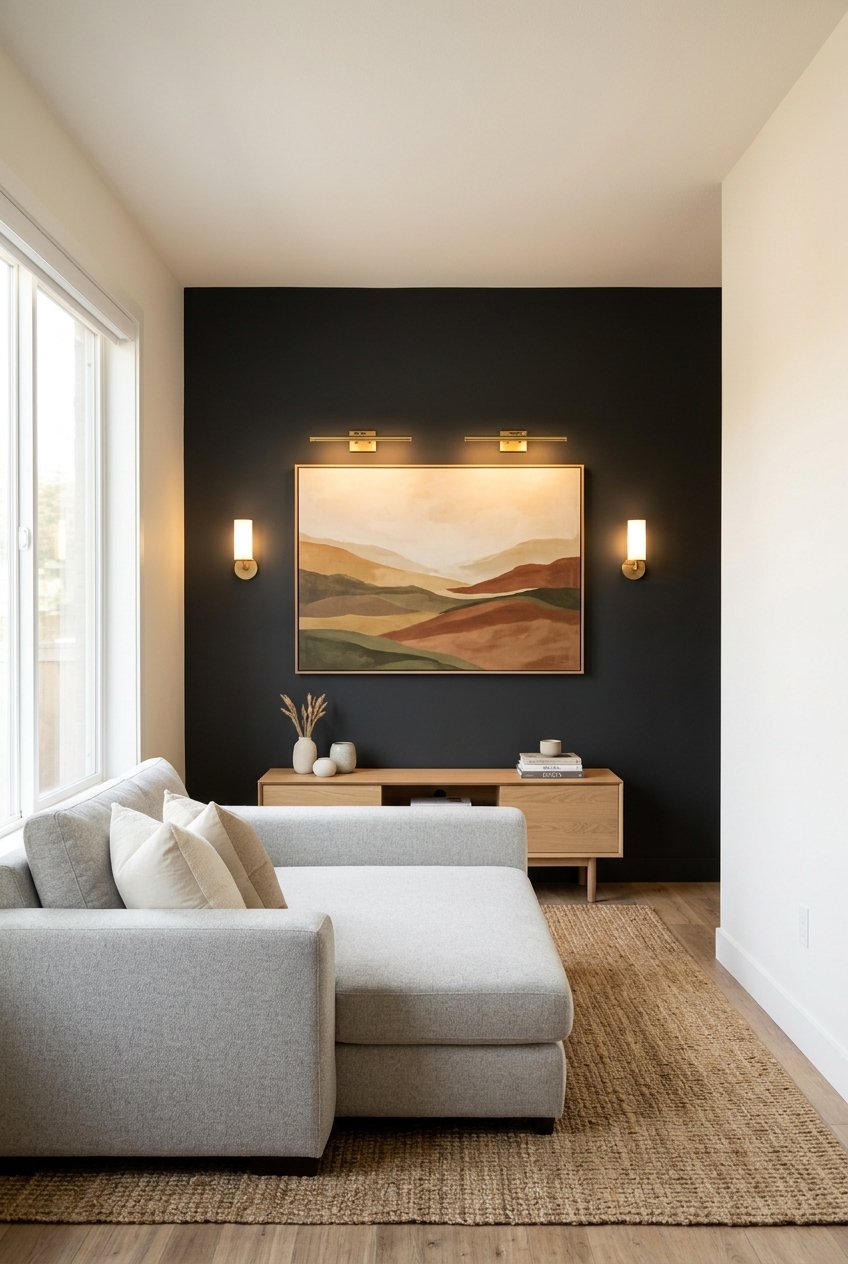
Having a long and narrow living room often feels like trying to decorate a hallway. You push a sofa against one wall, toss a TV on the opposite side, and suddenly you are left with a awkward bowling alley vibe.
The trick to transforming a tight, rectangular space is not about buying smaller furniture. It is about strategic placement, creating defined zones, and keeping traffic paths clear.
Whether you are arranging an apartment living room or tweaking a cozy cottage layout, these 15 practical layout strategies will help you make every square foot functional and stylish. you will learn about small living room ideas.
1. Create a Primary Walkway on One Side
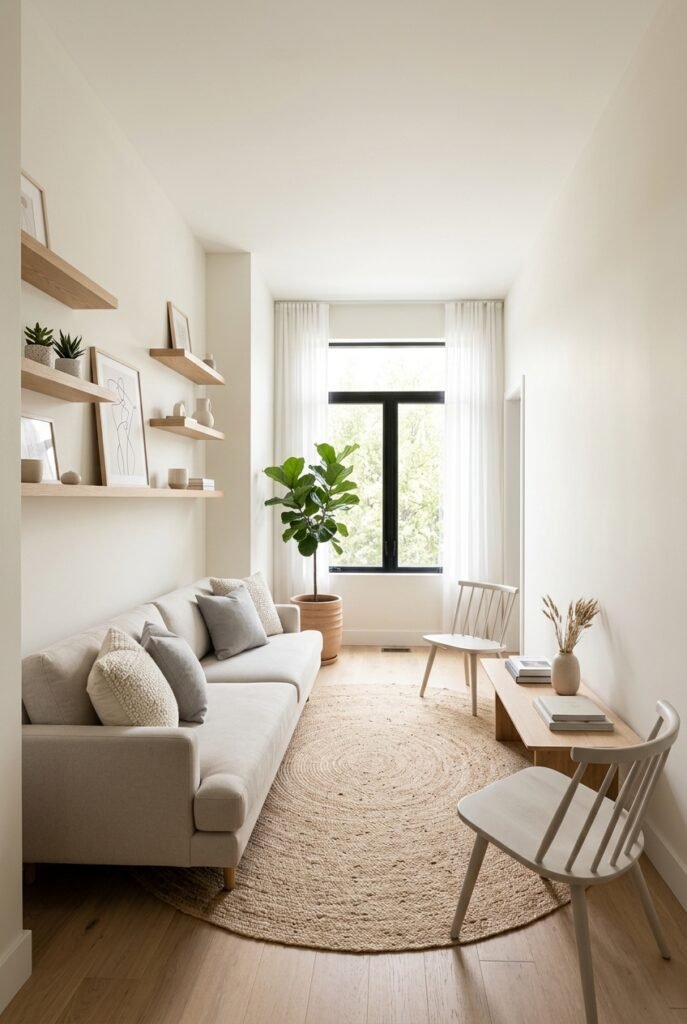
One of the biggest mistakes in narrow rooms is placing furniture in a zigzag pattern. When you have to weave through coffee tables and armchairs just to cross the room, the space instantly feels cramped and chaotic.
Pick one straight path along a single wall and keep it completely open from entrance to doorway. Position your main seating group on the opposite side. This single adjustment restores natural movement and instantly calms the room visually.
2. Float Your Sofa Away from the Wall
It sounds counterintuitive, but pushing all your furniture flat against the long walls actually highlights the narrow shape of the room. It creates an empty strip down the center that feels awkward rather than spacious.
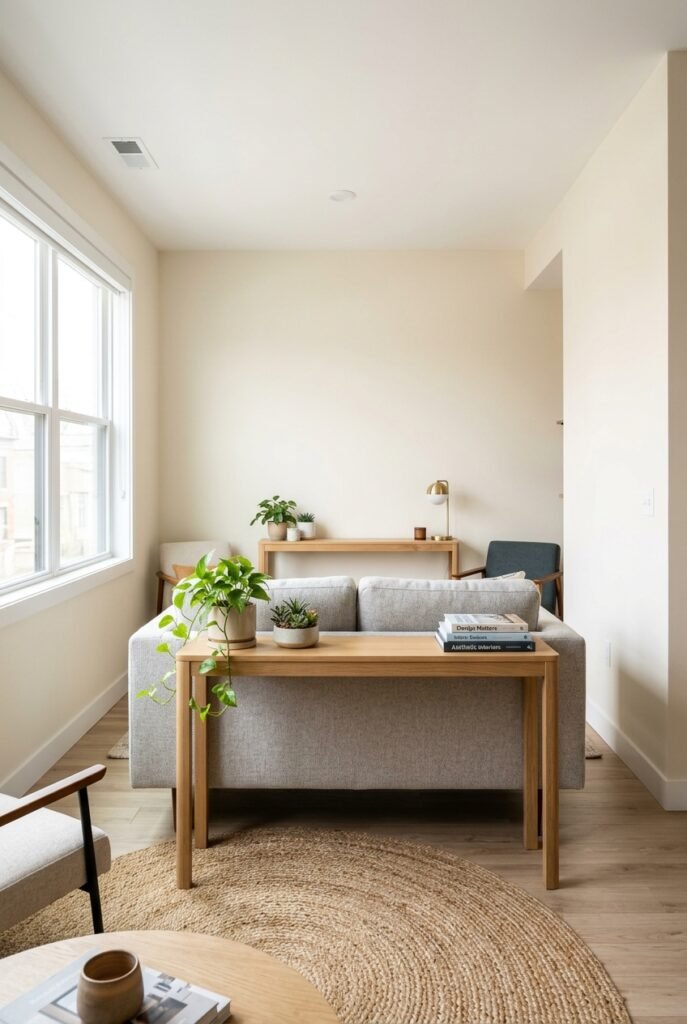
Pull your sofa forward by just 4 to 6 inches. If space allows, place a thin console table behind it. This creates depth, softens harsh wall lines, and gives the illusion that the room is wider than it actually is.
3. Divide the Room into Two Distinct Zones
Instead of trying to make one long room serve as a single seating area, divide the floor plan into two functional zones.
You can set up a main media area at one end and a secondary zone at the other. A small reading nook, a compact home office desk, or a bistro dining set works perfectly. This gives the long rectangle purpose and makes it feel like two complete rooms in one.
4. Choose an L-Shaped Sectional with a Low Profile
A bulky sectional can swallow a tight room whole, but a sleek L-shaped sofa with a low back profile works wonders.
Place the longer side against a wall and let the shorter chaise extension anchor one end of the room. This configuration provides ample seating without blocking sightlines or trapping light.
5. Swap the Traditional Coffee Table for Nesting Tables
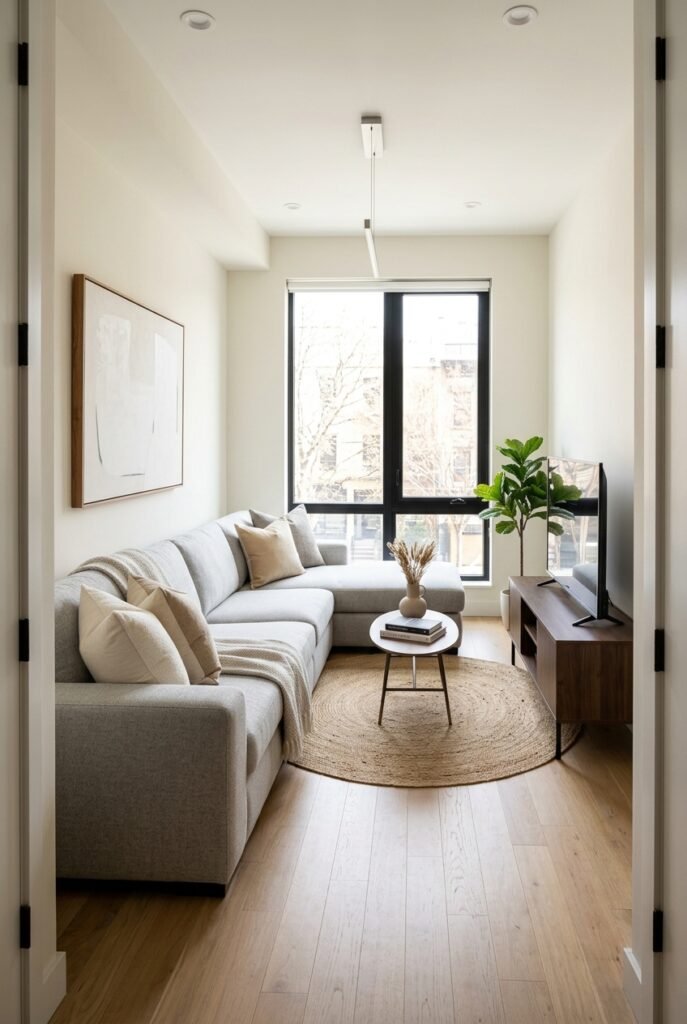
Large rectangular coffee tables take up precious central real estate in narrow layouts. They leave little legroom and force people to squeeze past.
Nesting tables or round ottomans are much better alternatives. You can spread them out when guests arrive and tuck them together when you need clear floor space. Soft edges also interrupt the sharp parallel lines of long walls.
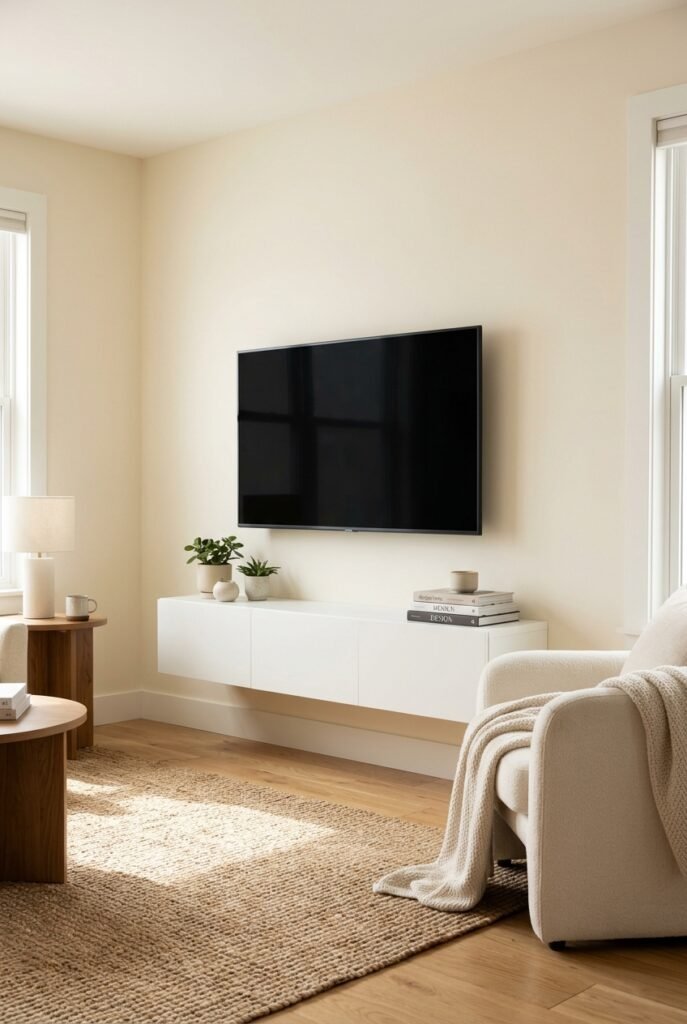
6. Mount Your TV and Use Floating Media Units
Floor-standing entertainment centers push your furniture inward, stealing valuable inches from your primary walkway.
Mount your television directly to the wall and place a shallow floating shelf beneath it. Keeping the floor visible underneath furniture creates an airy feeling, making small rooms look noticeably larger.
7. Use Round Area Rugs to Break Up Rectangular Lines
When you place a long rectangular rug in a narrow room, you reinforce the tunnel effect.
Try using an oversized round rug, or place two distinct area rugs to separate your functional zones. Curved boundaries trick the eye into seeing more width and disrupt rigid room dimensions.
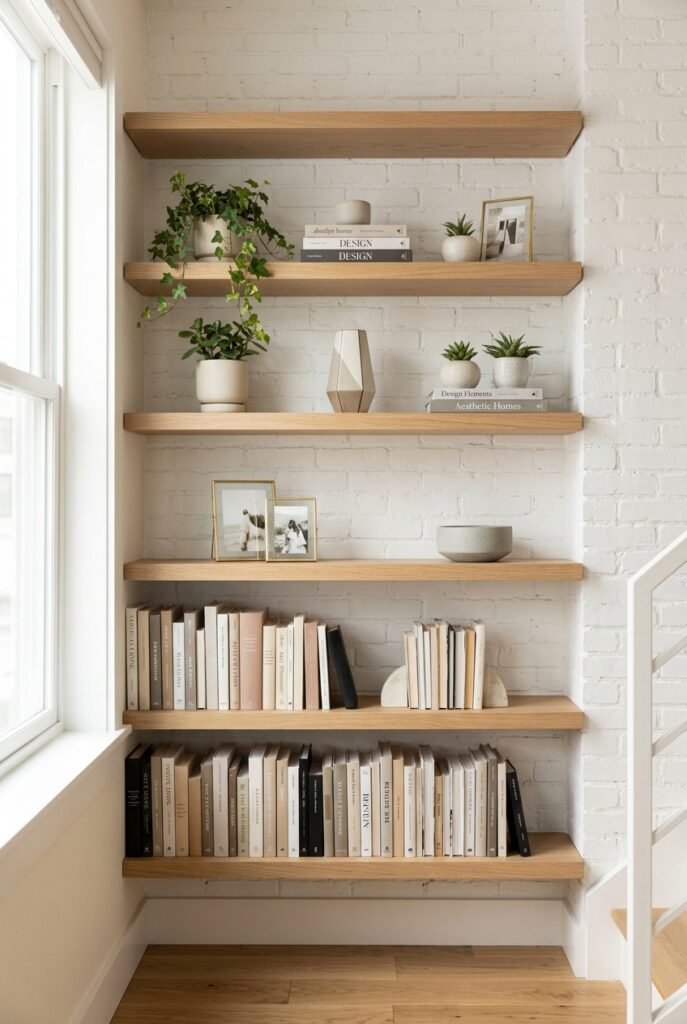
8. Utilize Vertical Wall Space for Storage
When floor space is limited, look up. Tall, slim bookcases or floating wall shelves draw the eye upward, shifting focus to ceiling height rather than floor width.
Keep styling light on high shelves. Overcrowding wall storage can make a narrow space feel top-heavy and closed in.
9. Place Accent Chairs Opposite the Main Sofa
Instead of buying a second couch, pair your primary sofa with two lightweight armchairs positioned opposite or at an angle.
Choose chairs with open arms or exposed legs so light passes through them easily. This arrangement completes a comfortable conversation circle without blocking the rest of the room.
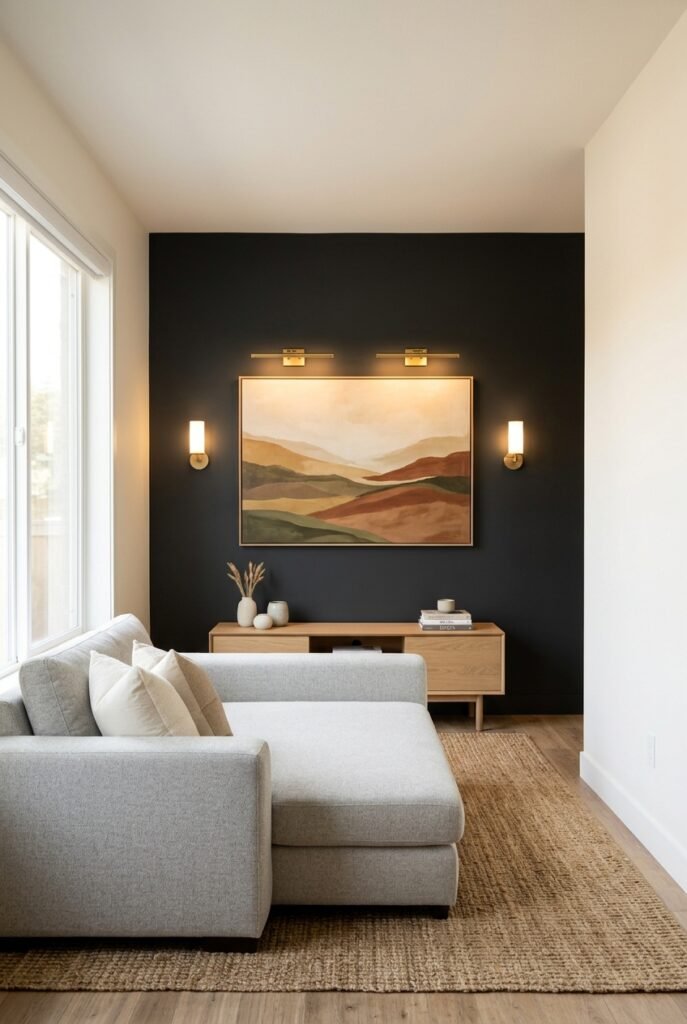
10. Anchor the Short Wall with a Focal Feature
Draw attention to the far end of the room to pull the eye inward. This visually shortens a long space and makes it feel cozy instead of elongated.
You can paint the back wall a rich accent color, hang a large piece of art, or place a tall statement plant like a Fiddle Leaf Fig at the far end.
11. Choose Leggy and Elevated Furniture Pieces
Furniture that sits flat on the floor acts like a solid block, stopping light and visual flow in its tracks.
Select sofas, armchairs, and credenzas with raised legs. Showing more open floor space beneath your furniture makes your entire living area feel open and light.
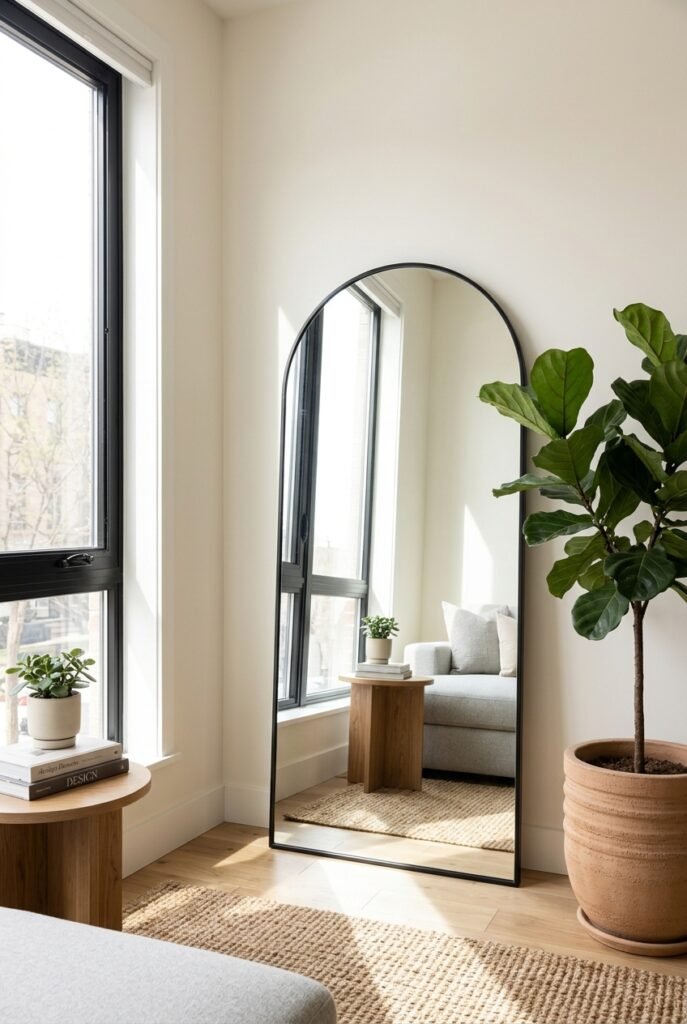
12. Hang Mirrors Parallel to Windows
Lighting plays a critical role in how wide a room feels. Dark corners make long spaces seem narrower than they really are.
Position a large wall mirror directly across from a main window. It reflects natural daylight deep into the space while doubling the visual width of your room.
13. Use Stools and Poufs for Flexible Seating
Hard furniture pieces take up fixed space regardless of whether you are using them. Flexible floor cushions, leather poufs, or slim ottomans solve this problem easily.
You can tuck them under a console table or coffee table when you are alone, then pull them out whenever you host family and friends.
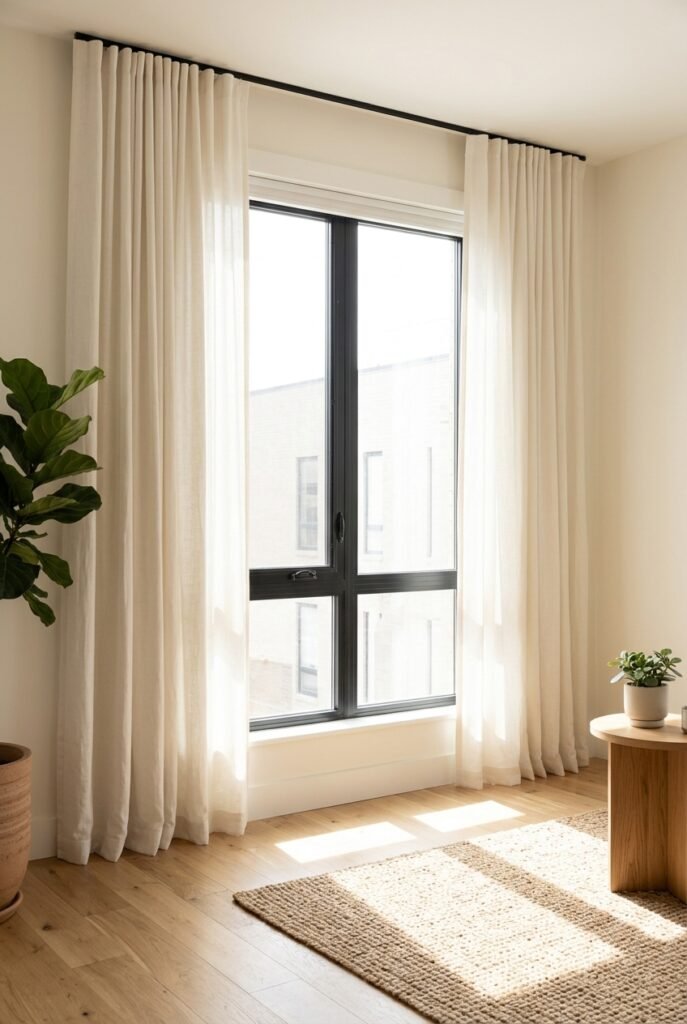
14. Keep Curtains Tall and Wide
Hanging curtain rods directly above the window frame cuts off the wall and emphasizes tight boundaries.
Mount your curtain hardware as close to the ceiling as possible and extend the rod 6 to 12 inches wider than the window frame. This makes windows look grander and gives your walls a wider, taller footprint.
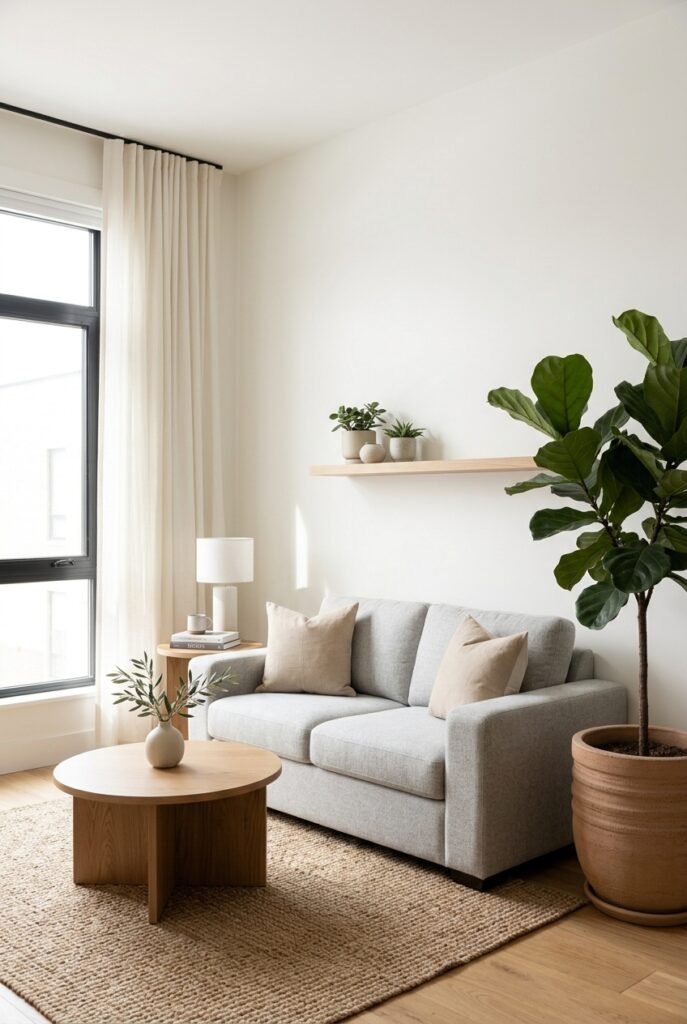
15. Adopt a Minimalist Storage and Decor Approach
Clutter is the quickest way to make a long, narrow room feel suffocating. Decorative items, excess throw pillows, and random floor clutter break up the room visually.
Stick to a curated color palette, choose a few meaningful accent pieces, and utilize hidden storage ottomans to keep everyday items out of sight.
Frequently Asked Questions
Where should a sofa be placed in a long narrow living room?
Place the sofa along one of the long walls, but pull it forward a few inches so it does not look glued to the drywall. If your room is wide enough, you can also position the sofa perpendicular to the long wall to act as a room divider.
How do you make a narrow living room look wider?
Use round rugs, float your key furniture pieces, hang mirrors opposite windows, and keep a single clear walking pathway on one side of the room. Painting the far short wall a darker shade also helps visually shorten the space.
Final Thoughts
Arranging a long and narrow room does not have to feel like a puzzle with missing pieces. By establishing clear traffic lanes, selecting elevated furniture, and dividing the floor plan into distinct zones, you can build a comfortable, functional layout that feels intentional and spacious. Try picking two or three of these layout shifts today to instantly unlock your space.
2 thoughts on “15 Small Living Room Layout Ideas for Long and Narrow Spaces”