
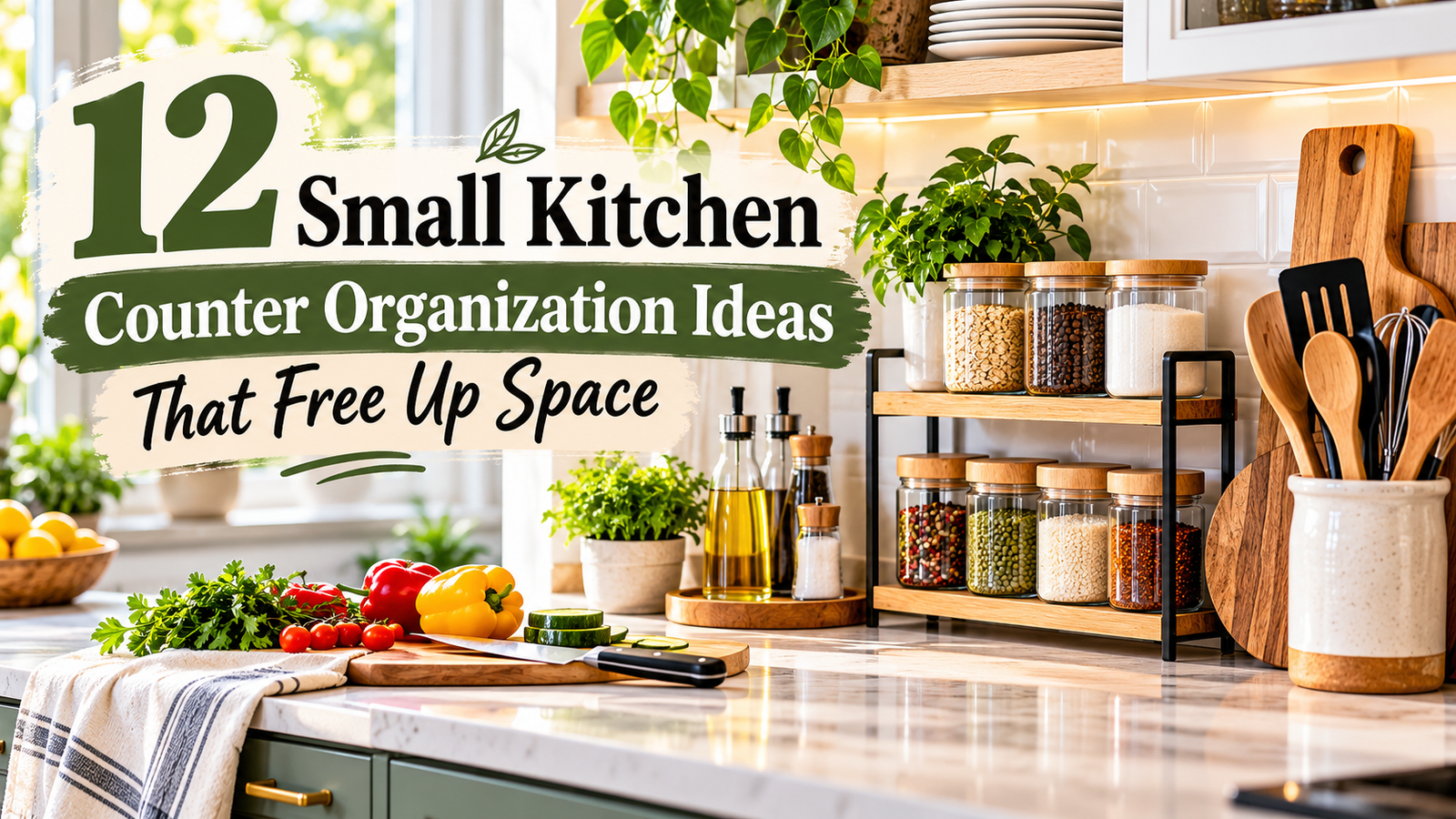
A cluttered kitchen counter can make even a beautiful kitchen feel cramped. When your coffee maker, cooking utensils, spice jars, and everyday essentials compete for the same limited surface, preparing meals becomes harder than it needs to be.
The solution is not always a bigger kitchen or expensive renovation. The right small kitchen counter organization ideas can help you reclaim valuable prep space using simple trays, tiered shelves, wall-mounted storage, and smarter appliance placement.
Whether you live in a small apartment or have a compact kitchen with limited cabinets, these practical ideas will help you create a cleaner and more functional space without sacrificing style.
Key Takeaways
- Use vertical storage to keep everyday essentials accessible without spreading them across the counter.
- Group similar items on trays to create organized zones.
- Store appliances you rarely use inside cabinets.
- Use clear containers and compact organizers to reduce visual clutter.
- Keep enough open counter space for food preparation and cooking.
1. Use a Tiered Shelf for Everyday Essentials
Image placement: Insert the tiered-shelf image here.
A two-tier countertop shelf is one of the easiest ways to create extra storage in a small kitchen. Instead of spreading spice jars, cooking oils, and small containers across the counter, you can arrange them vertically.
Choose a shelf that fits the space beside your stove or along the backsplash. Wood shelves with black metal frames work well in modern kitchens, while white or natural wood designs complement lighter interiors.
Place frequently used items on the lower level so they remain easy to reach. Reserve the upper level for lighter containers and ingredients you use regularly.
Space-saving tip: Measure the available counter depth before buying a shelf. A bulky organizer can take away the very workspace you are trying to create.
2. Group Everyday Items on a Decorative Tray
Image placement: Use the countertop tray image.
Small items often create the biggest mess. A bottle of olive oil, salt and pepper shakers, a utensil holder, and a few loose containers can quickly make your counter look crowded.
A simple tray brings these items together in one defined area. It also makes cleaning easier because you can lift the tray instead of moving each item separately.
Choose a wooden, bamboo, or washable tray that matches your kitchen style. Keep it near the cooking area and limit it to the essentials you use most often.
Avoid turning the tray into a collection of unrelated items. A little empty space around each object makes the arrangement look more intentional.
3. Make Use of Vertical Wall Space
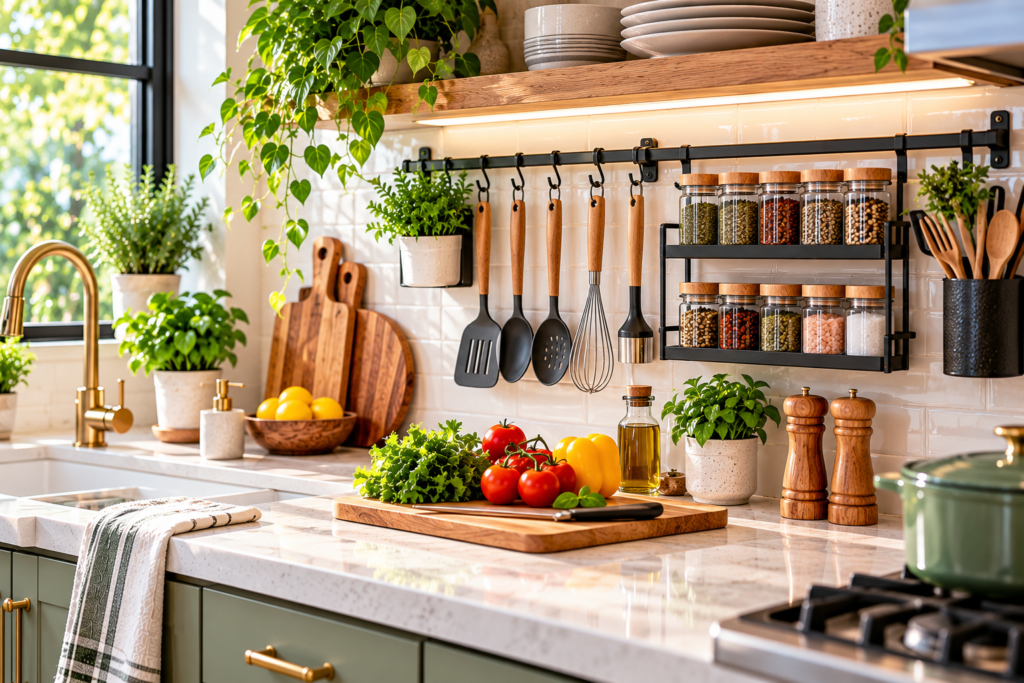
When your counters are full, look at the wall space around them. A suitable wall-mounted rail, magnetic knife strip, or small shelf can move frequently used tools off the work surface.
For example, a rail with hooks can hold lightweight utensils and measuring cups. A magnetic strip can keep compatible knives organized, while a narrow shelf can accommodate small spice containers.
This approach works especially well in galley kitchens where the counter runs along a single wall.
If you rent your home, check whether adhesive or tension-mounted alternatives will work for your wall surface and intended load. Always follow the manufacturer’s installation and weight-limit instructions.
4. Store Small Appliances More Strategically
Coffee makers, toasters, blenders, and air fryers can occupy a surprising amount of counter space.
Start by identifying which appliances you actually use every day. Keep those accessible and move occasional-use appliances into a cabinet, pantry, or suitable storage cart.
If you use your toaster every morning but your blender only once a week, the toaster may deserve a permanent spot while the blender can be stored elsewhere.
Before moving an appliance into storage, allow it to cool and clean it according to the manufacturer’s instructions. Keep ventilation, electrical safety, and accessibility in mind when deciding where appliances belong.
The goal is not to hide everything. It is to make sure the counter supports your daily routine rather than becoming long-term storage.
5. Transfer Frequently Used Ingredients Into Clear Containers
Image placement: Insert the clear-container image here.
Original packaging can make an otherwise organized counter look visually busy. A few matching containers can create a cleaner appearance while keeping ingredients easy to identify.
Use clear, food-safe containers for dry ingredients such as sugar, flour, oats, or coffee beans. Choose sizes that suit your available space and the quantity you use.
Keep only a small selection on the counter. Store bulk ingredients and less frequently used items in a cabinet or pantry.
Label containers when their contents are not immediately obvious. Make sure they are clean and completely dry before refilling them, and transfer ingredients only into containers suitable for food storage.
6. Create a Compact Coffee Station
Image placement: Use the coffee-station image.
If you make coffee every morning, a dedicated coffee station can help prevent mugs, coffee supplies, and small appliances from spreading across the kitchen.
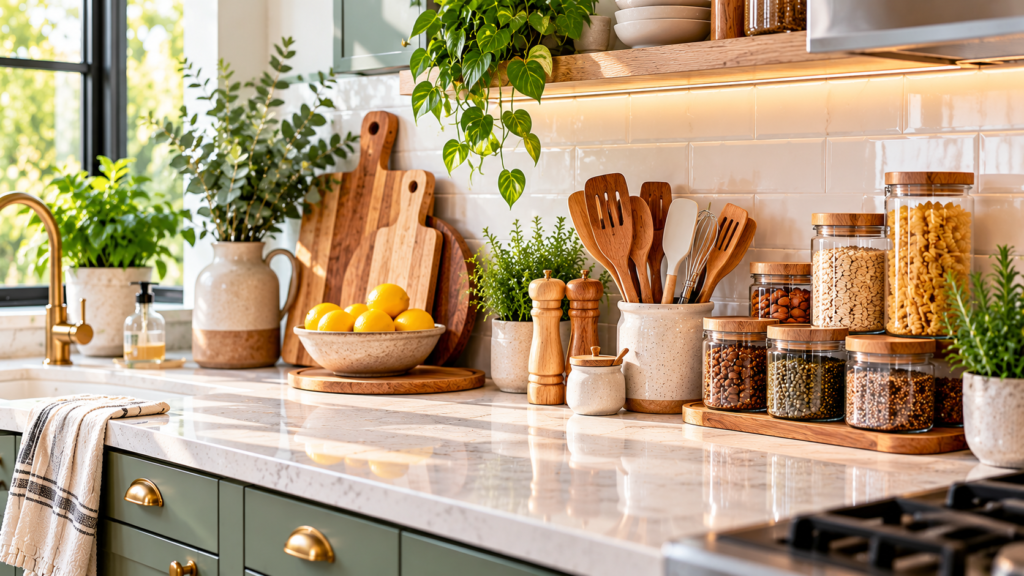
Choose one corner or a short section of counter for your coffee maker, a few mugs, and your daily coffee supplies. A small tray can keep accessories together, while a nearby cabinet can hold extra cups and supplies.
If space allows, a narrow shelf above the station can hold lightweight items. Keep the area around electrical appliances clear and follow the manufacturer’s clearance requirements.
A compact coffee station gives frequently used items a proper home and leaves the rest of the kitchen available for cooking.
7. Use a Lazy Susan for Oils and Condiments
Small bottles tend to gather in corners where they are difficult to reach. A compact rotating organizer, often called a Lazy Susan, can make these items easier to access.
Place cooking oils, vinegar, or a few frequently used condiments on the organizer. When you need something at the back, simply rotate it instead of moving several bottles.
Choose a size that fits comfortably within your available counter area. A model with a raised edge can also help prevent bottles from sliding off.
Avoid placing too many heavy containers on a small rotating organizer. Keep it stable and clean up any oil spills promptly.
8. Use Cabinet Doors for Extra Storage
The inside of a cabinet door can provide useful storage without occupying your countertop.
Depending on the cabinet design, you may be able to install a suitable rack for spices, wraps, or other lightweight kitchen essentials. This can free up counter space and make frequently used items easier to find.
Before installing anything, measure the available space and check that the rack will not interfere with shelves, hinges, or the cabinet closing properly.
For rental kitchens, removable organizers may be an option if they are compatible with the surface and the weight of the items being stored.
Keep heavy or fragile objects in secure storage rather than placing them where they could fall when the door opens.
9. Keep Only Essential Items on Display
One of the most effective small kitchen counter organization ideas costs nothing. Remove items that do not need to stay on the counter.
Start by taking everything off the surface. Clean the counter, then return only the items you use daily or genuinely want to display.
Move spare mugs, duplicate utensils, unopened packages, mail, and occasional-use appliances to appropriate storage areas.
You do not have to create a completely empty kitchen. A utensil holder, a small plant, or a tray of cooking essentials can still make the space attractive.
The key is to leave enough open surface for chopping vegetables, preparing ingredients, and setting down dishes.
10. Use a Compact Fruit Basket
A fruit bowl can be both useful and decorative, but a large basket may consume too much valuable workspace.
Choose a compact basket that fits into an unused corner without blocking your main preparation area. If your kitchen has sufficient vertical clearance, a suitable tiered fruit stand may use the available space more efficiently.
Keep the basket limited to the amount of produce you can use before it becomes overcrowded. Store produce according to its needs, since not every fruit or vegetable belongs in the same storage conditions.
A well-sized basket keeps suitable produce visible and accessible while adding a natural touch to your kitchen.
11. Choose a Space-Saving Dish-Drying Rack
Dish racks can occupy a large part of the counter, particularly in kitchens without much space beside the sink.
Consider a compact rack that fits over or beside the sink, provided it is compatible with your sink dimensions and does not obstruct normal use.
A roll-up drying rack can be useful because it can be removed and stored when it is not needed. Another option is a smaller rack designed to hold only the dishes you wash regularly.
Empty the rack promptly once dishes are dry. Leaving clean dishes piled up throughout the day can make even a well-organized counter feel crowded.
12. Add Decorative Elements Without Creating Clutter
An organized kitchen can still feel warm and personal. The trick is to choose a few decorative items rather than filling every empty corner.
A small herb plant, a wooden cutting board, or a simple ceramic utensil holder can add texture and character. Choose items that fit your color scheme and do not interfere with food preparation.
For a cohesive look, repeat two or three materials such as wood, ceramic, and black metal instead of mixing too many colors and finishes.
Keep decorative items away from heat sources and areas where they may interfere with food hygiene or cleaning.
A few carefully selected accents can make your kitchen feel finished without sacrificing practical workspace.
How to Organize a Small Kitchen Counter in 20 Minutes
If you are not sure where to begin, follow this quick process.
- Clear the surface. Remove everything from the counter so you can see the space available.
- Sort the items. Separate daily essentials, occasional-use items, and things that do not belong in the kitchen.
- Choose your zones. Create practical areas for cooking, coffee preparation, and washing up.
- Add only useful organizers. Use a tray, a tiered shelf, or a compact rack where it solves a real problem.
- Protect your prep space. Keep the main work surface clear enough for everyday cooking.
- Maintain the system. Return items to their assigned places after use.
You do not need to purchase all the organizers mentioned in this article. Start with the change that addresses your biggest problem and add other solutions only when necessary.
Common Kitchen Counter Organization Mistakes to Avoid
Even attractive organizers can make a small kitchen less functional if they are used incorrectly.
- Buying organizers before decluttering. You may end up storing unnecessary items in new containers.
- Choosing oversized racks. Measure your available surface before purchasing anything.
- Keeping every appliance outside. Store occasional-use appliances when practical.
- Ignoring cleaning access. Leave enough room to wipe surfaces and clean around organizers.
- Overdecorating the counter. Decorative objects should not compete with the space you need for cooking.
- Storing items unsafely. Keep heavy objects stable and away from edges or unsuitable mounting surfaces.
A good system should make the kitchen easier to use, not create more work.
Frequently Asked Questions
How do I organize a small kitchen counter with very little space?
Start by removing items you do not use daily. Then group essential items on a compact tray, move occasional-use appliances into cabinets, and use vertical storage where practical. Keep your main food preparation area clear.
What should I keep on my kitchen counter?
Keep frequently used items such as a coffee maker, utensil holder, or cooking oils if you use them regularly. The exact selection depends on your cooking habits and available storage.
How can I organize kitchen counters on a budget?
Begin with decluttering and rearranging what you already own. Reuse suitable trays and containers, then purchase only the organizers that address a specific storage problem.
Do tiered shelves work in small kitchens?
Yes. Tiered shelves can make use of vertical space and keep everyday items accessible. However, they should fit the available counter depth and leave sufficient room for food preparation.
How do I keep kitchen counters clutter-free?
Give each item a designated storage location, return things after use, and avoid leaving deliveries, packaging, and rarely used appliances on the counter. A brief daily reset can help maintain the system.
Final Thoughts
A small kitchen does not need to feel crowded. With a few thoughtful changes, you can make better use of the space you already have.
Start with the simplest solutions: clear unnecessary items, group daily essentials, use vertical storage, and keep your main preparation area open. Add a tray or compact organizer only when it makes your routine easier.
The best small kitchen counter organization ideas are the ones that fit your space, your budget, and the way you actually cook.
4. Internal links for Decoro Hub
Because your site already has a published article titled “14 Aesthetic Kitchen Countertop Organization Tips,” this new topic overlaps significantly with existing content.
My SEO recommendation is to update and expand the existing article instead of publishing a second page with nearly identical search intent. Preserve its current permalink if it already has indexing history. The article above can provide the new structure and additional ideas.
You can also link naturally to these related pages, using their actual published URLs:
- 15 Small Kitchen Layout Ideas for Maximum Counter Space Suggested anchor: “small kitchen layout ideas”
- 12 Modern Kitchen Cabinet Color Ideas for Small Homes Suggested anchor: “kitchen cabinet color ideas”
- 11 Budget Small Kitchen Refresh Ideas Without Remodeling Suggested anchor: “budget-friendly kitchen refresh ideas”
Verify each URL in WordPress before inserting the link.
5. External links
Add these two relevant editorial references in the article, ideally near the organization tips and practical guidance sections.
- Martha Stewart: 8 Small Kitchen Organization Rules Pros Swear By discusses practical ways to prioritize everyday essentials and organize limited kitchen space.
Martha Stewart
- The Spruce: How to Organize a Small Kitchen offers additional ideas for making better use of cabinets, walls, and underused storage areas.
The Spruce
Use descriptive anchor text rather than generic phrases such as “click here.
1 thought on “12 Small Kitchen Counter Organization Ideas to Save Space”