

A staircase tucked between two walls does not need a grand entrance hall or an oversized open space to look beautiful. With the right colors, subtle lighting, and thoughtful wall details, even a compact staircase can become one of the most attractive features of a home.
The secret is choosing a design that works with the space instead of overwhelming it. A gently curved staircase, a richly colored accent wall, textured finishes, and a soft glow from concealed lighting can create a sophisticated look without filling the entire house with unnecessary architectural features.
From moody burgundy walls to deep teal textures and warm walnut finishes, these stairs decor ideas between two walls focus on modern aesthetics, practical proportions, and distinctive details. Each concept offers a different way to make an enclosed staircase feel intentional, elegant, and connected to the rest of the home.
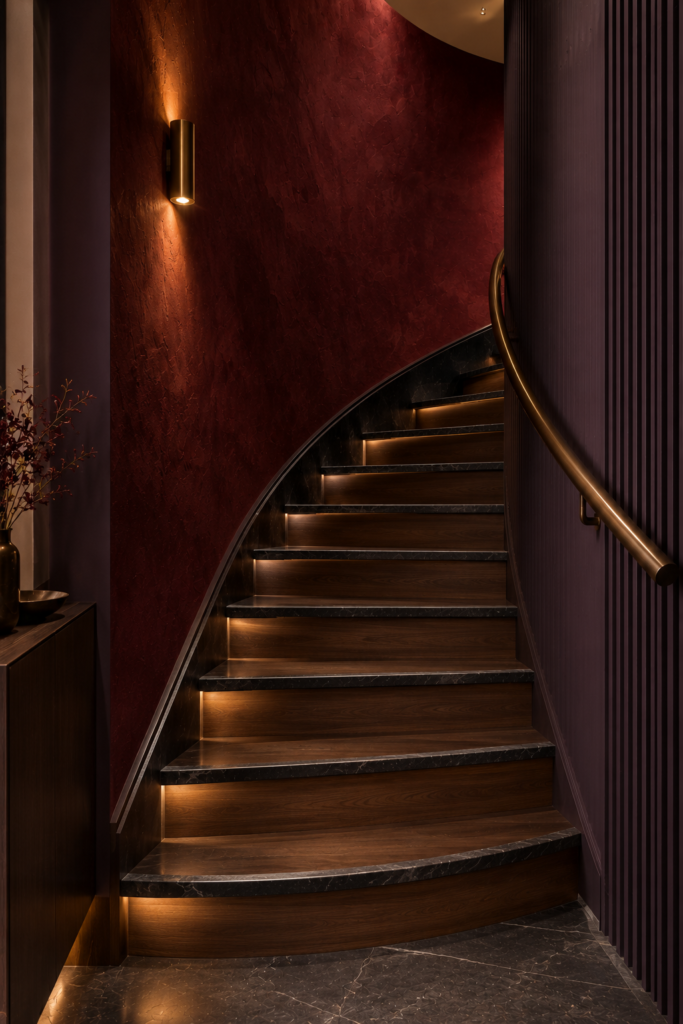
1. Deep Burgundy Walls with Soft Golden Lighting
Burgundy is a beautiful choice for a staircase that needs personality without excessive decoration. Its deep, wine-inspired color creates a warm and intimate atmosphere, especially when paired with dark wood and subtle brass details.
For a compact staircase between two walls, keep the structure simple. A gently sweeping semicircular staircase with dark walnut or charcoal-stone treads can provide enough architectural interest without taking over the surrounding floor plan.
Use burgundy textured paint on one wall and a slightly darker plum shade on the opposite wall. A slim brass wall sconce and a discreet strip of warm lighting beneath selected stair edges are enough to highlight the curves. Avoid illuminating every surface; the shadows are part of what makes this design beautiful.
The finished look should feel like a carefully designed boutique residence: moody, warm, understated, and luxurious.
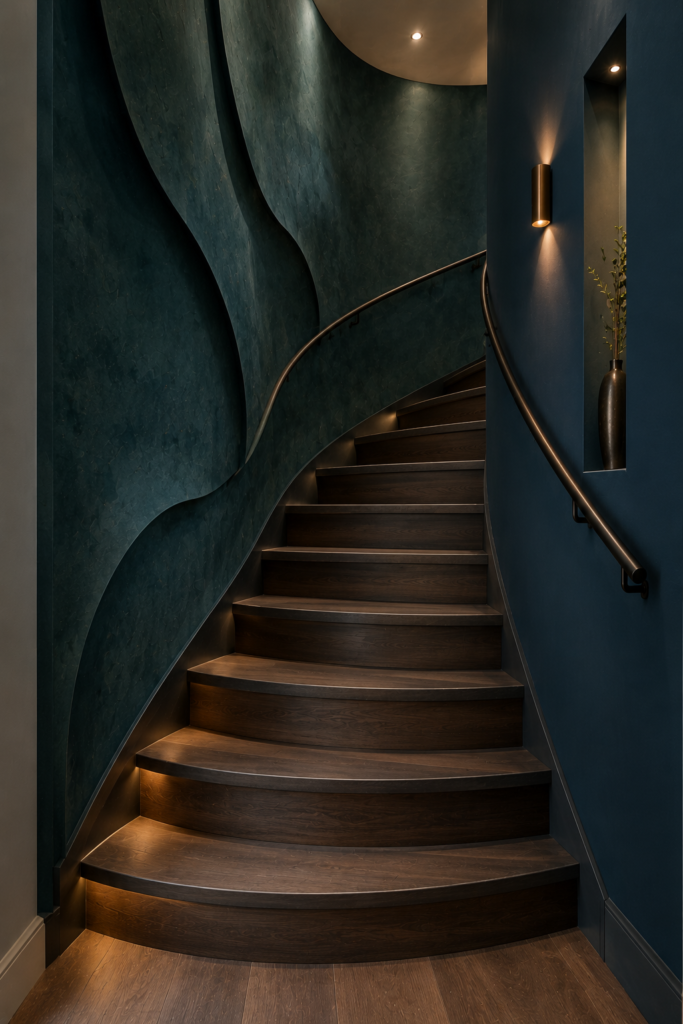
2. Midnight Teal with Sculptural Wall Texture
Deep teal offers a distinctive alternative to ordinary white or beige stairwell walls. It combines the richness of blue with the natural character of green, making it ideal for interiors that need color without visual clutter.
Instead of adding paintings, shelves, or decorative objects, let one wall become the feature. A sculptural plaster finish with soft, flowing contours can echo the curve of the stairs. Keep the opposite wall relatively smooth to balance the texture.
Dark oak steps, a simple black handrail, and one small warm wall light complete the look. The goal is to create an understated architectural feature rather than a heavily decorated staircase.
This style works particularly well in contemporary homes with wood flooring, dark door frames, or similarly rich colors in nearby rooms.
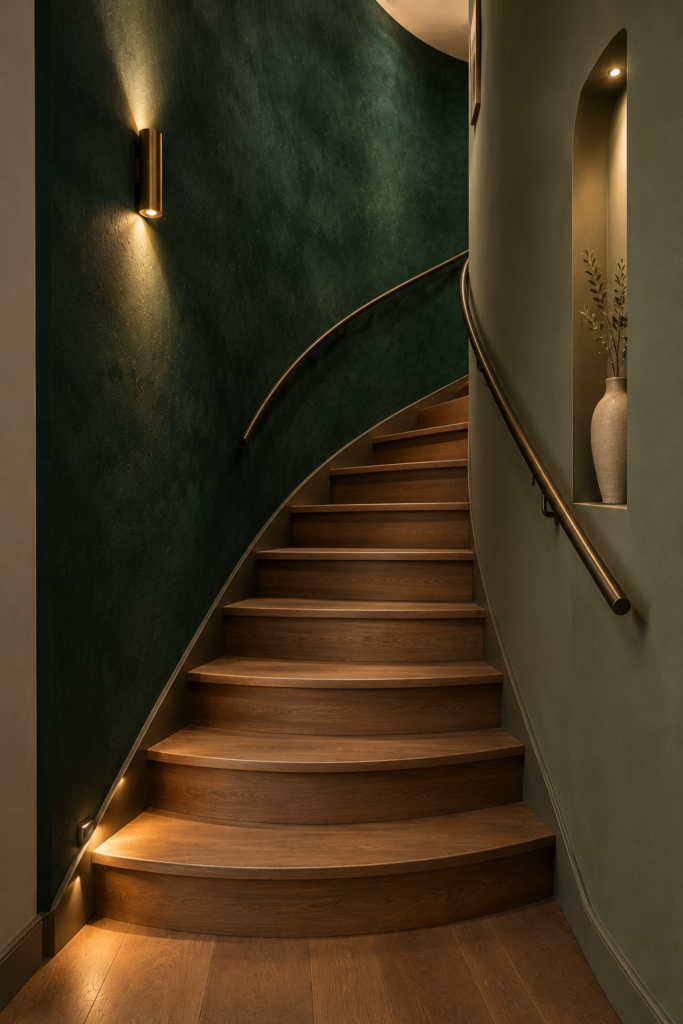
3. Emerald Green and Warm Oak Minimalism
Emerald green can make a staircase feel distinctive while still allowing the surrounding architecture to remain simple. The trick is to use the color as a carefully controlled feature rather than covering every surface with elaborate detailing.
Pair one emerald-green wall with warm oak steps and a soft ivory or muted olive opposite wall. The natural wood introduces warmth, while the green creates a rich focal point.
For a subtle contemporary touch, add a small recessed wall niche with a single ceramic vase or use a slim brass sconce. A concealed light near the landing can softly illuminate the wall without making the staircase glow unnaturally.
This combination is particularly effective when the staircase sits near a living room or entrance with wooden flooring and natural materials.
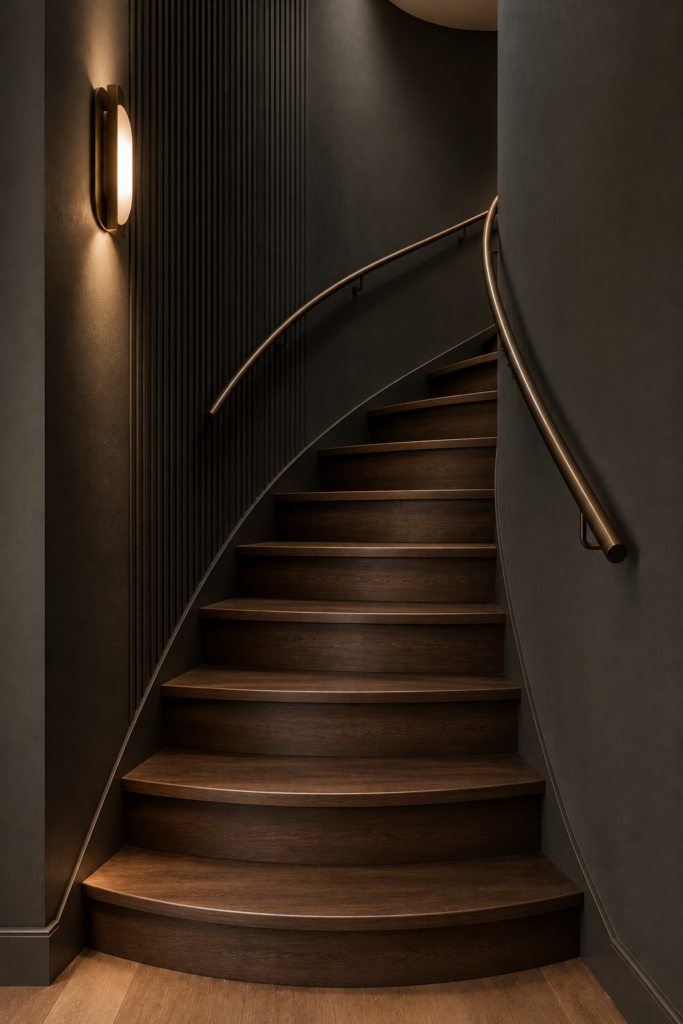
4. Charcoal Walls with a Single Statement Light
A charcoal staircase can look modern and elegant when the design focuses on texture instead of decoration. Rather than introducing several colors and multiple lighting strips, use a restrained combination of dark walls, warm wood, and one beautiful light fixture.
A compact semicircular staircase with charcoal-painted walls and walnut treads creates a strong architectural silhouette. One wall can feature narrow vertical grooves, while the other remains smooth to keep the space from feeling crowded.
Choose a sculptural wall sconce with a warm, diffused glow. This provides a focal point without requiring ceiling lights, illuminated niches, and bright step edges everywhere.
For smaller homes, this is one of the easiest looks to adapt because it relies on finishes and proportions rather than extensive structural changes.
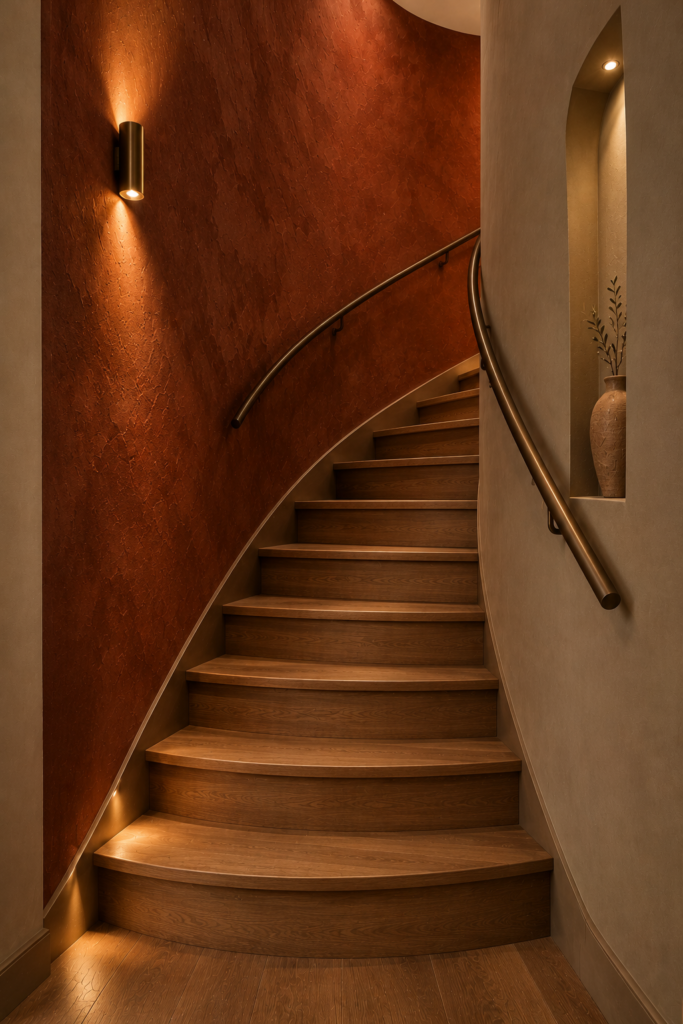
5. Terracotta and Textured Plaster Curves
Terracotta brings warmth and individuality to a staircase without relying on glossy surfaces or elaborate metallic accents. Its earthy red-orange tone works especially well with warm wood, handmade ceramics, and subtle architectural textures.
For this design, use a compact curved staircase with oak or dark-stained wooden treads. Apply terracotta plaster to one wall and introduce a soft clay-beige finish on the opposite side. A gently curved plaster detail can visually connect the walls without creating bulky decorative structures.
Lighting should remain understated: one small wall fixture or a discreet warm glow near the landing is usually sufficient.
The result feels organic, contemporary, and personal, making it a strong option for homes that favor tactile finishes and rich, natural colors.
6. Add a Narrow Gallery of Minimal Artwork
A staircase between two walls can benefit from artwork, but a small and carefully arranged collection usually works better than a crowded gallery.
Choose two or three framed pieces in complementary colors and align them with the ascending direction of the stairs. Abstract artwork, architectural sketches, or minimal botanical prints can add personality without competing with the staircase itself.
Black frames work well with charcoal walls, while slim walnut or brass frames complement warmer interiors. Keep the opposite wall simple so the artwork remains the focal point.
For a compact staircase, use shallow frames and secure mounting to avoid anything protruding unnecessarily into the walking space.
7. Use Subtle Vertical Wall Panels
Vertical panels introduce structure and rhythm without requiring bold patterns or additional accessories. They are especially useful when a staircase feels plain but the available space does not allow for bulky decorations.
Painted MDF panels, slim timber battens, or shallow fluted plaster details can all work well. Deep olive, muted navy, and warm charcoal provide a more distinctive appearance than standard white.
Apply the panels to one wall rather than both if the staircase is narrow. This preserves visual balance and prevents the space from feeling enclosed.
A simple wooden staircase and one understated wall light are often enough to complete the design.
8. Create a Small Decorative Wall Niche
A recessed niche adds architectural interest without occupying valuable floor space. Unlike shelves that project into the stairwell, a niche remains integrated into the wall.
A single tall niche can display a ceramic vase, a sculptural object, or a small arrangement of dried branches. Paint the interior a slightly deeper color than the surrounding wall to create depth.
For a contemporary finish, choose an arched or softly curved niche that echoes the shape of the staircase. A small concealed light may be added if the niche needs emphasis, but natural shadows can be equally effective.
Keep the display minimal so the staircase remains practical and uncluttered.
9. Combine Dark Walls with Natural Wood
Dark walls and natural wood create a balanced combination of modern sophistication and warmth. The dark finish gives the staircase definition, while the wood prevents the space from feeling too cold.
Try deep olive, smoky blue, or charcoal walls with medium-oak or walnut treads. A matte finish generally looks more natural than highly reflective surfaces in a compact stairwell.
The two walls do not need identical treatments. One can remain smooth while the other features subtle grooves or a small recessed detail.
This is a versatile approach because it works with contemporary, minimalist, and transitional interiors without requiring extensive decoration.
10. Keep the Staircase Minimal and Architectural
Sometimes the best design decision is to leave the staircase relatively simple. A well-proportioned curve, attractive materials, and carefully finished walls can create more impact than a collection of decorative features.
Choose one main wall color, one complementary material, and a single lighting feature. Let the shape of the stairs and the texture of the surfaces provide visual interest.
This approach is particularly useful in small homes, where too many contrasting colors, deep wall recesses, and decorative fixtures can make the stairwell feel crowded.
A restrained design is also easier to maintain and update over time.
How to Make a Small Staircase Look More Expensive
A beautiful staircase does not depend on expensive construction or excessive lighting. A few well-considered choices can make a noticeable difference.
- Choose one standout color: Burgundy, emerald, midnight teal, and terracotta can all create a distinctive focal point.
- Use lighting selectively: One or two well-positioned fixtures often look more refined than numerous LED strips.
- Prioritize wall texture: Mineral paint, subtle plaster effects, and shallow panels add depth without taking up floor space.
- Keep the steps practical: Decorative curves should fit the available layout and preserve comfortable, consistent treads.
- Coordinate materials: Pairing wood with plaster, stone with matte paint, or brass with a deep color creates a cohesive appearance.
- Avoid unnecessary accessories: Keep the walking path clear and use wall niches or carefully mounted artwork when decoration is needed.
Always consult a qualified professional before modifying the staircase structure, handrails, or lighting installation. A decorative design should preserve safe access between floors.
Final Thoughts
The best stairs decor ideas between two walls combine thoughtful design with realistic proportions. A compact semicircular staircase can look distinctive through rich colors, sculptural plaster, natural wood, and carefully placed lighting without requiring a grand hall or excessive decoration.
Whether you prefer deep burgundy, midnight teal, emerald green, charcoal, or warm terracotta, choose a design that complements the rest of your home. Focus on the wall finishes, keep the lighting soft, and let the staircase’s curved shape become the main feature.
With a restrained approach and a few distinctive details, even a small enclosed staircase can feel beautifully designed.