

Earthy home decor is a beautiful way to make your home feel warm, peaceful, and connected to nature. By combining natural materials, organic textures, warm colors, and simple furniture, you can create an inviting interior that feels timeless rather than trendy.
The best part is that you do not need to renovate your entire home to achieve this look. Small changes, such as adding wooden furniture, linen curtains, ceramic accessories, and indoor plants, can make a noticeable difference.
These earthy home decor ideas will help you bring natural beauty into your living room, bedroom, kitchen, and other spaces. Whether you prefer modern interiors, rustic details, or a minimalist aesthetic, you can adapt these ideas to match your home and budget.
1. Start with Warm, Earthy Colors
Color is one of the easiest ways to create a natural interior. Earthy shades take inspiration from soil, stone, sand, forests, and other elements of nature. They create a calm foundation that works well with many decorating styles.
Begin with a neutral base such as warm white, cream, beige, or soft greige. These shades make a room feel welcoming and provide a versatile background for furniture and accessories.
Next, introduce deeper natural colors through smaller details. Terracotta, olive green, clay brown, muted rust, and warm taupe can add depth without making the room feel overwhelming.
You can also combine different shades of the same color. For example, a beige sofa, caramel cushions, a brown wooden table, and cream curtains create a layered look that feels coordinated rather than flat.
Easy color combinations to try:
- Cream, beige, and natural oak for a soft modern look.
- Olive green, warm white, and walnut for a grounded atmosphere.
- Terracotta, sand, and dark brown for rustic warmth.
- Greige, muted sage, and light wood for understated elegance.
Keep your main colors consistent throughout the room, then use a few contrasting accents to create visual interest.
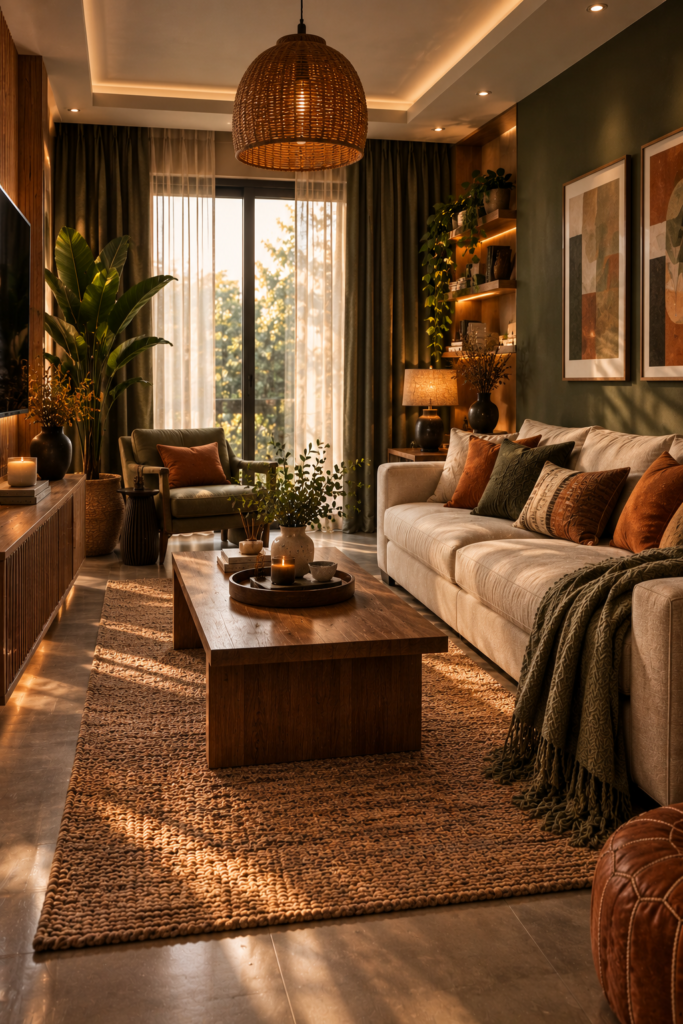
2. Bring Natural Wood into Your Interior
Wood is one of the most effective materials for creating a warm, nature-inspired home. Its natural grain, subtle color variations, and tactile finish add character to a space without requiring excessive decoration.
For a light and airy interior, choose oak, ash, or other pale wood finishes. Walnut and darker brown woods work well when you want a richer, more dramatic atmosphere. You can mix different wood tones, but repeating at least one finish throughout the room helps maintain a cohesive appearance.
Start with a wooden coffee table, bedside table, dining table, or console. If you already have furniture, you can introduce wood through picture frames, trays, shelves, or decorative bowls.
Natural wood also pairs beautifully with linen, cotton, wool, stone, and ceramics. These combinations create a balanced interior with a mixture of smooth and textured surfaces.
Ways to use wood in your home:
- Add a natural wood coffee table to your living room.
- Choose wooden bedside tables for a warm bedroom.
- Use floating oak shelves for books and accessories.
- Introduce wooden serving boards in the kitchen.
- Add small wooden frames and decorative bowls.
You do not need to use wood everywhere. A few well-chosen pieces can create enough warmth while allowing the room to remain visually light.
3. Layer Natural Fabrics and Organic Textures
A room can use beautiful earthy colors and still feel incomplete if every surface looks smooth or similar. Texture adds depth, softness, and personality, making a space feel more comfortable and thoughtfully designed.
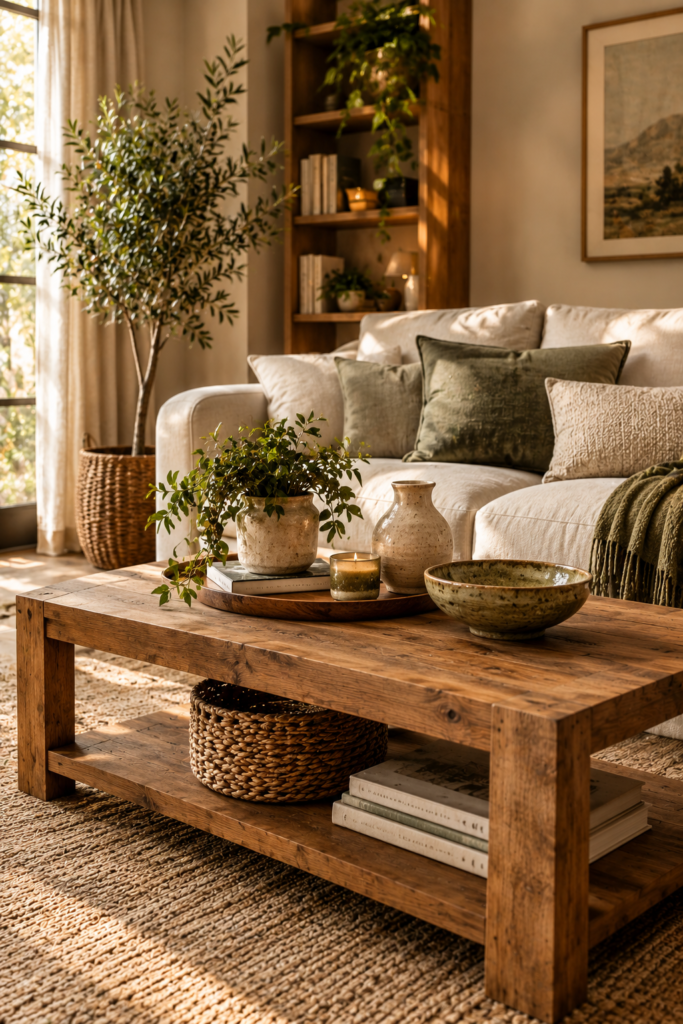
Natural-looking fabrics such as linen, cotton, wool, jute, and boucle work particularly well with earthy interiors. Use them on curtains, cushions, throws, rugs, and upholstered furniture.
For example, pair a linen sofa with textured cotton cushions and a chunky knit throw. A woven jute rug can ground the seating area, while a soft wool blanket adds warmth during colder months.
You can also introduce contrast through materials. A smooth ceramic vase looks especially attractive beside a rough wooden tray, while a woven basket can soften the appearance of a sleek cabinet.
Simple ways to add texture:
- Use linen curtains in cream or warm beige.
- Layer cushions in different fabrics.
- Add a woven rug beneath your seating area.
- Place woven baskets beside furniture.
- Combine ceramic, wood, glass, and natural fibers.
The key is to create variety without adding too many competing patterns. A limited color palette allows different textures to stand out naturally.
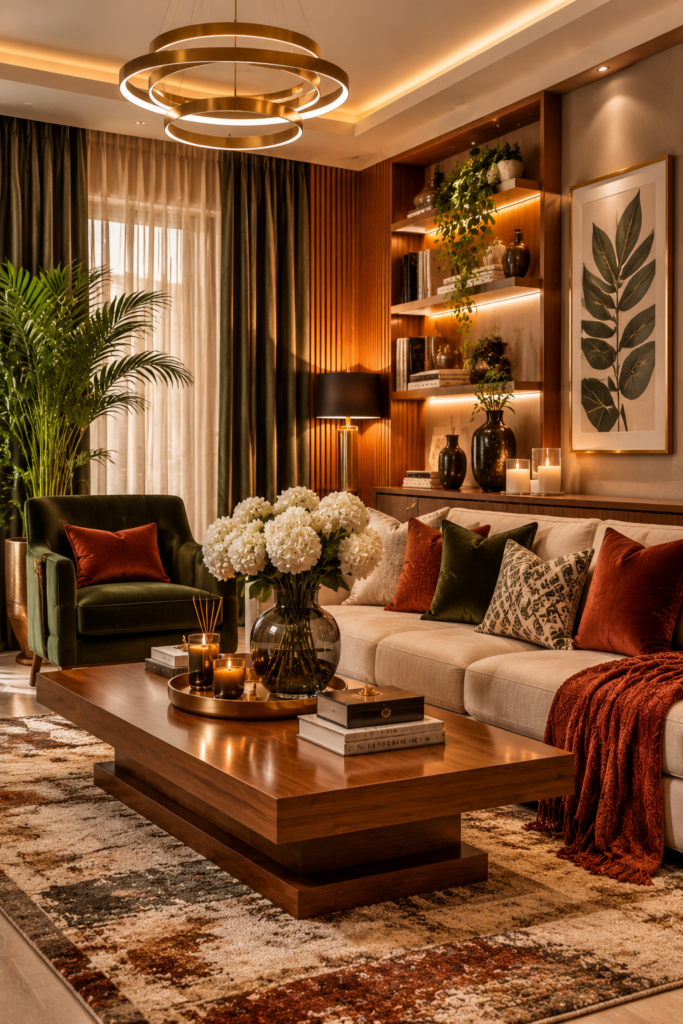
4. Decorate with Indoor Plants and Natural Greenery
Indoor plants introduce a fresh, organic element that complements earthy home decor. Their green leaves create a natural contrast against beige walls, wooden furniture, and neutral textiles.
Choose plants according to the available light and the amount of care you can provide. A tall indoor plant can fill an empty corner, while smaller plants work well on shelves, consoles, and side tables.
If your home receives limited sunlight, research plant varieties that tolerate lower-light conditions. Alternatively, use dried branches, preserved botanical arrangements, or other natural decorative elements where live plants may struggle.
Planters also influence the overall appearance. Terracotta pots provide a rustic feel, while matte ceramic and woven baskets suit softer contemporary interiors. Repeating two or three planter styles can help the room feel coordinated.
Avoid filling every surface with greenery. A few carefully positioned plants generally create a cleaner and more balanced effect.
Plant styling ideas:
- Place a tall plant near a bright window.
- Use small potted plants on floating shelves.
- Choose terracotta or textured ceramic planters.
- Add a simple botanical arrangement to a dining table.
- Keep plant placement practical for watering and maintenance.
Natural greenery adds color without requiring a complicated decorating scheme.
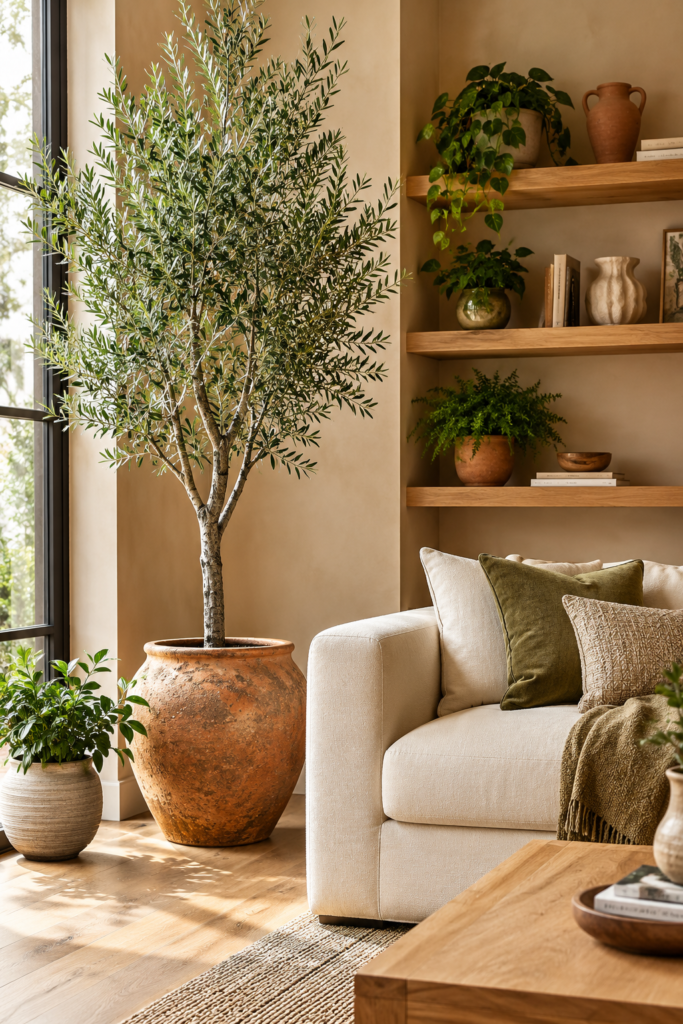
5. Create an Earthy Bedroom with Soft, Natural Details
The bedroom is an ideal place to use earthy colors because they can help create a relaxed and comfortable atmosphere. Instead of relying on bold patterns or bright accents, focus on soft colors, natural materials, and a balanced arrangement.
Start with bedding in cream, oatmeal, beige, or muted sage. Layer different fabrics to create depth, such as a cotton duvet cover, linen pillowcases, and a textured throw at the foot of the bed.
Wooden bedside tables and warm lighting can make the room feel more inviting. Choose lamps with fabric shades or ceramic bases to introduce subtle texture. A simple piece of botanical artwork can complete the look without overcrowding the walls.
If you prefer darker interiors, add walnut furniture, cocoa-colored textiles, or muted olive accents. Keep enough lighter surfaces in the room to maintain a comfortable balance.
Bedroom decorating ideas:
- Choose bedding in natural, muted shades.
- Add a textured throw and layered pillows.
- Use wooden bedside tables.
- Introduce warm bedside lighting.
- Keep artwork and decorative accessories simple.
An earthy bedroom should feel personal and restful rather than overly styled. Choose materials that look attractive and feel comfortable in everyday use.
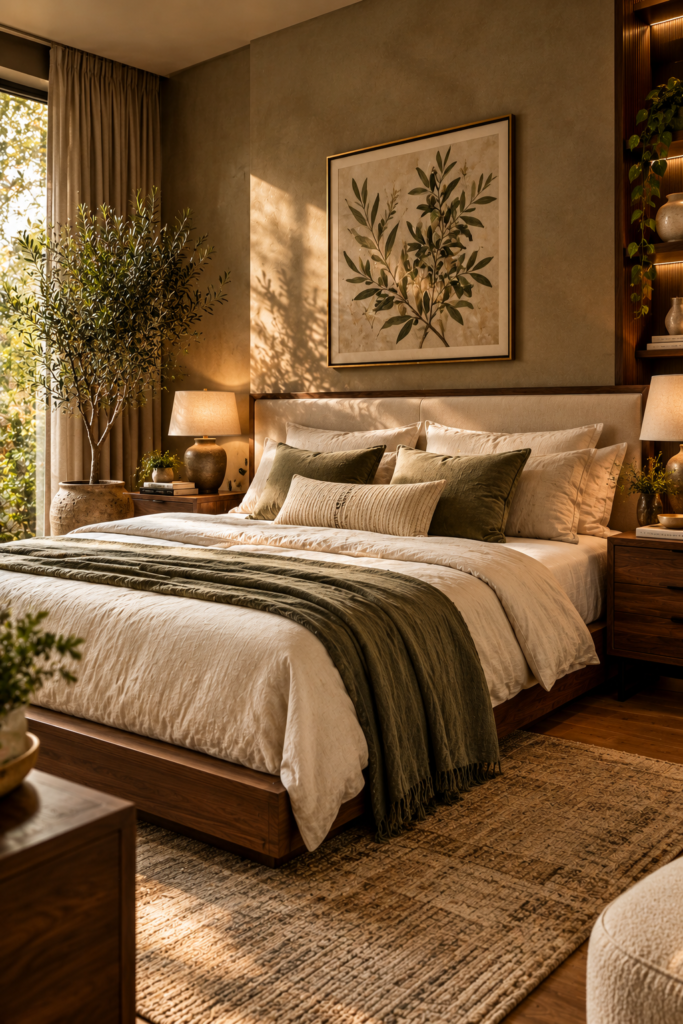
6. Style Your Kitchen with Natural Materials
The kitchen can also benefit from earthy colors and organic materials. Even without replacing cabinets or countertops, you can introduce a more natural appearance through accessories, textiles, lighting, and everyday items.
Wooden cutting boards, ceramic bowls, linen tea towels, and stoneware dishes are practical choices that also work as decoration. Display a few attractive pieces on an open shelf or countertop while keeping the main preparation areas clear.
If you are planning a larger update, consider warm white cabinetry, wood accents, muted green details, or natural-looking stone surfaces. These materials can create a timeless appearance when combined thoughtfully.
Lighting is important too. Warm pendant lights above an island or dining area can complement wood finishes and make the kitchen feel more inviting.
Simple earthy kitchen ideas:
- Display wooden cutting boards against the backsplash.
- Use ceramic bowls and stoneware accessories.
- Add linen tea towels in muted natural shades.
- Introduce a small herb plant near a suitable window.
- Keep countertops organized to highlight the materials.
The aim is to combine beauty with functionality. Choose decorations that are easy to clean and do not interfere with everyday kitchen tasks.
7. Use Stone, Clay, and Handmade Accessories
Small accessories can make earthy home decor feel more authentic. Materials such as stone, clay, and ceramic have natural variations that add character without requiring bright colors or elaborate designs.
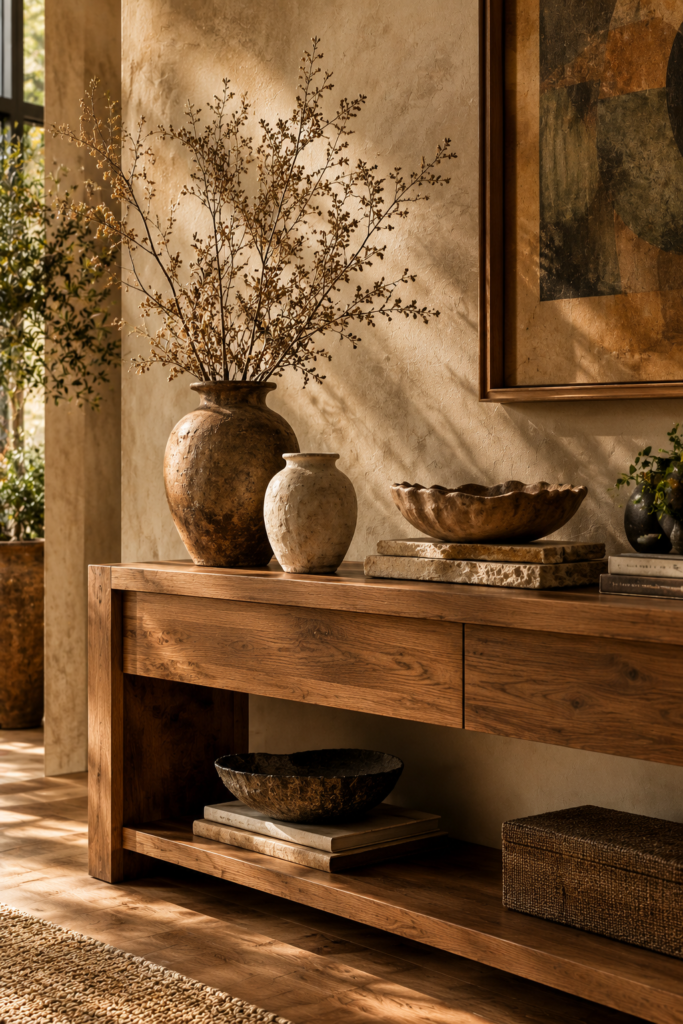
A ceramic vase, sculptural bowl, stone tray, or handmade-looking pot can become a subtle focal point on a coffee table, console, or shelf. Look for matte finishes, organic shapes, and colors inspired by sand, clay, and natural rock.
You can combine these objects with wooden furniture and soft fabrics to create contrast. For example, a sculptural ceramic vase on a walnut console can add interest while keeping the overall palette understated.
Group accessories in small arrangements rather than scattering many items around the room. Vary their height and shape, and leave some open space so each piece can be appreciated.
Accessories worth considering:
- Matte ceramic vases.
- Handmade-looking clay bowls.
- Stone trays for coffee tables.
- Textured pottery in warm neutral shades.
- Simple decorative objects with organic shapes.
Choose pieces that you genuinely like and that complement the rest of your interior. A few distinctive objects can have more impact than a large collection of unrelated decorations.
8. Add Warm Lighting for a Cozy Atmosphere
Lighting can completely change the appearance of an earthy interior. Warm, layered lighting brings out the natural tones of wood, fabrics, and ceramics while creating a comfortable atmosphere in the evening.
Instead of relying entirely on a bright ceiling light, combine several sources. A table lamp beside the sofa, a floor lamp near a reading chair, and a pendant light over a dining table can serve different purposes.
Choose lampshades made from linen, textured fabric, or natural-looking woven materials. These finishes complement earthy colors and help soften the overall appearance of a room.
Warm-white bulbs are often a good choice for relaxing spaces, although task areas may benefit from brighter lighting. Consider how you use each part of the room before choosing the brightness and placement.
Candles can also provide a gentle decorative accent when used safely. Keep them away from curtains, plants, and other flammable materials, and never leave a burning candle unattended.
Lighting tips for natural interiors:
- Use table lamps to create cozy corners.
- Add a floor lamp beside a reading chair.
- Choose shades in linen or natural textures.
- Use warm-white lighting in relaxing spaces.
- Keep lighting balanced rather than excessively bright.
A thoughtful lighting plan makes earthy colors and natural materials feel richer throughout the day.
9. Bring Earthy Decor Together on a Budget
Creating a natural interior does not require buying everything new. You can achieve the look gradually by working with the furniture and accessories you already own.
Begin by removing unnecessary clutter and choosing a simple color palette. Rearrange existing furniture to create better flow, then introduce a few inexpensive details that make the biggest visual difference.
Secondhand wooden furniture can be refreshed with careful cleaning or an appropriate finish. Cushion covers, throws, baskets, and ceramic accessories can also change the appearance of a room without a major expense.
Prioritize quality and usefulness over quantity. Instead of buying many decorative objects at once, choose a few pieces that work well with your existing space.
Budget-friendly ideas:
- Rearrange furniture before purchasing new pieces.
- Replace cushion covers with earthy colors.
- Use baskets for attractive, practical storage.
- Display existing wooden boards and ceramic items.
- Introduce plants that suit your home’s light conditions.
- Refresh shelves with fewer, better-coordinated accessories.
A natural-looking home develops over time. Start with small improvements and add pieces only when they contribute to the overall design.
Common Earthy Home Decor Mistakes to Avoid
Earthy interiors can feel timeless and welcoming, but the wrong combination of colors and materials may make a room look flat, cluttered, or too dark.
Avoid these common mistakes:
- Using only beige: Introduce wood grain, textured fabrics, greenery, or darker accents to create depth.
- Mixing too many wood finishes: Different tones can work together, but repeat a few finishes to keep the room cohesive.
- Overcrowding shelves: Leave some open space between accessories.
- Ignoring lighting: Dark corners can make warm colors feel heavy.
- Adding too many plants: Choose suitable locations and leave enough space for furniture and movement.
- Buying decor without a plan: Check that new items complement your existing palette and materials.
The most successful earthy interiors balance natural textures, comfortable furniture, thoughtful lighting, and personal details.
Final Thoughts
Earthy home decor ideas offer a practical way to create a home that feels warm, natural, and timeless. Warm colors, wooden furniture, textured fabrics, indoor plants, handmade accessories, and soft lighting can work together to create a balanced interior.
You do not need to transform every room at once. Start with a simple color palette, add a few natural materials, and improve the lighting where necessary. Then build on the look with accessories that suit your personal style and everyday needs.
Whether you prefer a modern living room, a cozy bedroom, or a kitchen filled with natural details, an earthy approach can help you create a space that feels welcoming and connected to nature.
Frequently Asked Questions
What is earthy home decor?
Earthy home decor uses colors and materials inspired by nature, including beige, brown, terracotta, muted green, wood, stone, linen, and ceramic. The goal is to create a warm and balanced interior.
Which colors work best for earthy interiors?
Cream, warm white, beige, taupe, terracotta, olive green, and brown are popular choices. Combining a neutral base with a few natural accent colors creates depth.
How can I decorate my home with earthy tones on a budget?
Start by rearranging existing furniture, changing cushion covers, adding plants, using woven baskets, and displaying wooden or ceramic accessories. Small changes can refresh a room without a major renovation.
Can earthy home decor work in a modern home?
Yes. Earthy colors and materials work well with contemporary furniture, clean lines, simple lighting, and minimalist layouts. Natural textures add warmth without making the design look traditional.
How do I make an earthy room look more luxurious?
Combine quality-looking natural textures, balanced lighting, coordinated colors, and a few distinctive accessories. Keep surfaces organized and avoid overcrowding the room.
Are earthy interiors suitable for small rooms?
Yes. Use lighter earthy shades, compact furniture, mirrors where useful, and uncluttered surfaces. Add darker colors through smaller accents to maintain visual balance.
1 thought on “Earthy Home Decor Ideas for a Natural, Cozy Home”