
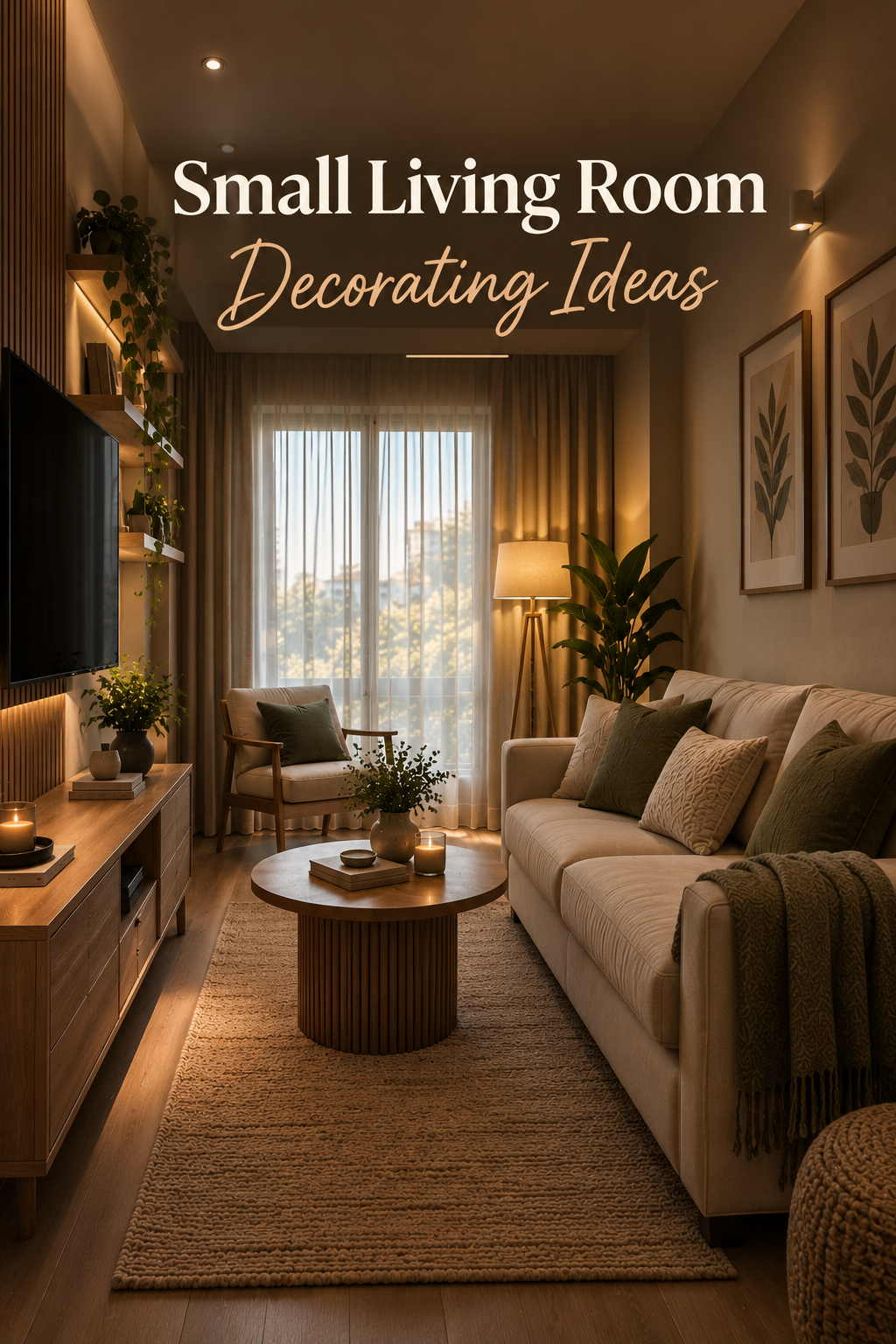
A small living room can be just as beautiful and comfortable as a large one. The secret is choosing the right furniture, using colors wisely, improving lighting, and making every corner functional. With a few thoughtful changes, even a limited space can feel open, organized, and stylish.
These small living room decorating ideas will help you transform your space without spending money on a complete renovation. Whether you prefer modern interiors, cozy neutral decor, or a minimalist style, these practical tips will help you create a living room that looks bigger and feels more inviting.
1. Choose Furniture That Fits Your Space
One of the most important small living room decorating ideas is choosing furniture that fits the room instead of overwhelming it. Oversized sofas, bulky armchairs, and large coffee tables can make a compact living room feel crowded.
Start by measuring your room before buying new furniture. A compact two- or three-seat sofa may provide enough seating without taking up the entire wall. Furniture with raised legs can also create a more open appearance because more of the floor remains visible.
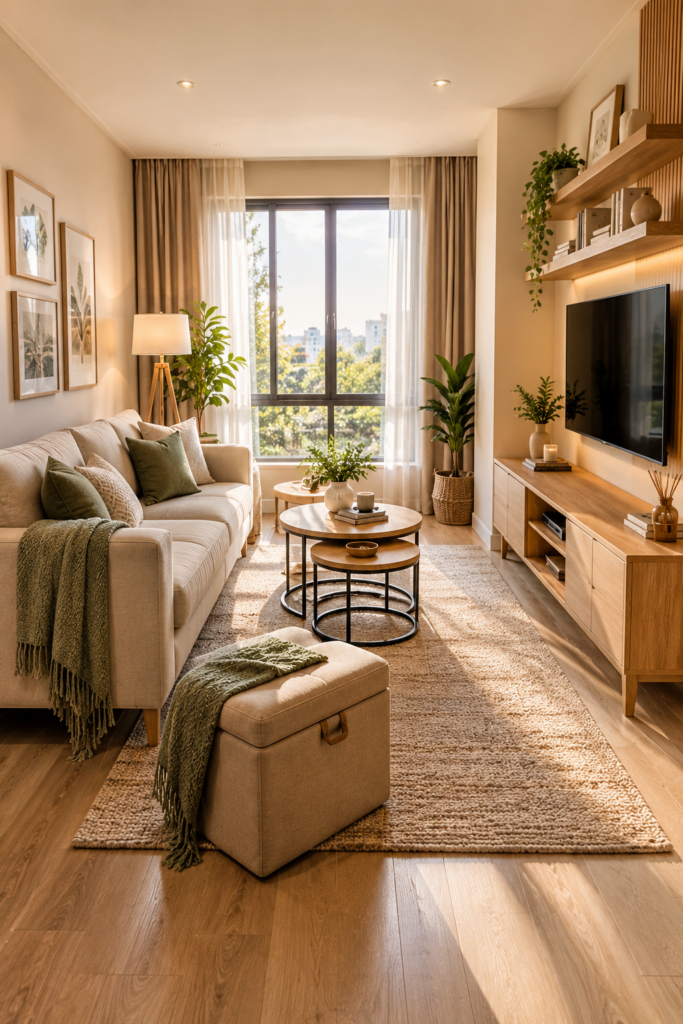
Consider multifunctional pieces that offer extra storage. A storage ottoman can hold blankets and magazines, while a coffee table with shelves can keep everyday essentials organized. Nesting tables are another practical choice because they can be tucked away when you need more floor space.
Avoid buying furniture simply because it looks attractive in a showroom. The right piece should match your room’s dimensions and leave enough space for comfortable movement.
Helpful furniture ideas:
- Choose a compact sofa with a simple design.
- Use nesting tables instead of oversized coffee tables.
- Select ottomans with hidden storage.
- Consider wall-mounted shelves instead of bulky cabinets.
- Keep pathways clear between the sofa, doors, and other furniture
2. Use Light Colors to Create an Open Feel
Color plays an important role in how large or small a room appears. Light shades can help reflect natural light and create an airy atmosphere, making them an excellent choice for compact living rooms.
White, cream, warm beige, pale gray, and soft greige are versatile options for walls and larger furniture pieces. These shades work well with natural wood, textured fabrics, and subtle decorative accessories.
You do not need to use the same color everywhere. Instead, create a coordinated palette with two or three complementary shades. For example, cream walls, a beige sofa, and light wood furniture can create a warm and balanced interior.
If you prefer darker colors, introduce them through small details such as cushions, lamps, picture frames, or a decorative vase. These accents add contrast without making the room feel visually heavy.
Painting the walls and ceiling in similar light shades can also reduce strong visual boundaries, helping the space feel more continuous. For a little extra character, add texture through linen curtains, woven baskets, or a soft area rug.
Color combinations worth trying:
- Cream walls with beige furniture and oak accents.
- Soft gray walls with white curtains and charcoal cushions.
- Warm white walls with natural wood and muted green accessories.
- Pale greige walls with taupe textiles and black metal details.
The goal is not to make your living room completely white. It is to create a balanced color scheme that feels bright, cohesive, and comfortable.
3. Arrange Furniture for Better Flow
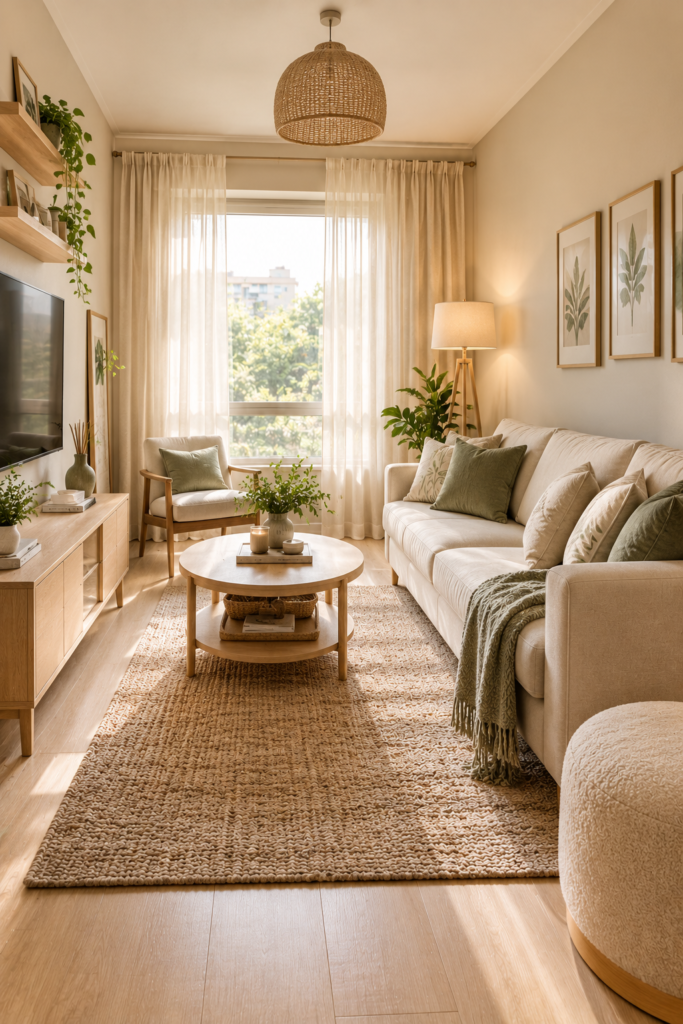
Even a beautifully decorated room can feel cramped if the furniture is arranged poorly. A smart layout helps improve movement, makes the room more functional, and allows the available floor space to work harder.
Begin by identifying the main purpose of your living room. If you use it mainly for watching television, arrange the sofa and chairs around that focal point. If you frequently entertain guests, prioritize comfortable conversation areas with enough room to move between seats.
In a narrow living room, placing the sofa against a longer wall can sometimes open up the central area. In a square room, a compact seating arrangement around a small round coffee table may work better.
Avoid placing furniture directly in front of windows or blocking entrances. Leave a comfortable walking path through the room and resist the temptation to fill every empty corner.
An area rug can help define the seating zone, particularly in an open-plan home. Choose a rug that suits the furniture arrangement rather than one that makes the entire room feel crowded.
Simple layout tips:
- Keep the main walkway free of obstacles.
- Place the largest furniture piece first.
- Use a small round or oval coffee table where space is limited.
- Avoid unnecessary extra chairs and side tables.
- Leave some visible floor space around furniture.
Before purchasing anything, experiment with the furniture you already own. A simple rearrangement may improve your living room more than adding another decorative piece.
4. Improve Lighting in Small Living Rooms
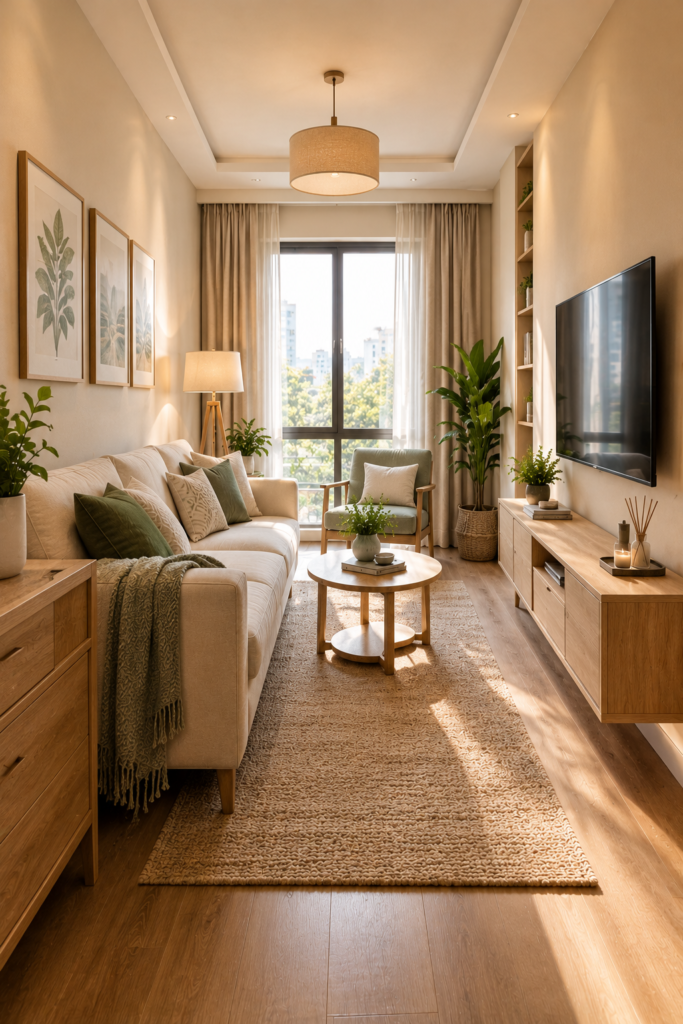
Good lighting can make a small living room feel warmer, brighter, and more welcoming. A single ceiling light may illuminate the room, but it often leaves corners looking flat or dark.
Start by making the most of natural daylight. Lightweight curtains allow sunlight to enter while maintaining privacy, and keeping windows clear helps the room feel more open. Avoid placing tall furniture where it blocks the main source of natural light.
Next, introduce different types of artificial lighting. A slim floor lamp beside the sofa provides useful reading light, while a table lamp creates a softer atmosphere in the evening. Wall-mounted lights are particularly helpful when floor space is limited.
Warm-white lighting often works well for relaxing living spaces. You can also use a brighter light source in areas where you read, work, or complete other tasks.
Mirrors and reflective surfaces can help distribute available light, although their effect depends on the position of the light source and the mirror.
Lighting ideas to try:
- Hang sheer curtains to allow more daylight inside.
- Add a slim floor lamp beside the sofa.
- Use wall sconces instead of large floor lamps.
- Choose bulbs suited to the room’s activities.
- Avoid oversized lamps that dominate small tables.
A combination of natural light, ambient lighting, and task lighting makes the space more useful throughout the day.
5. Add Mirrors and Simple Wall Decor
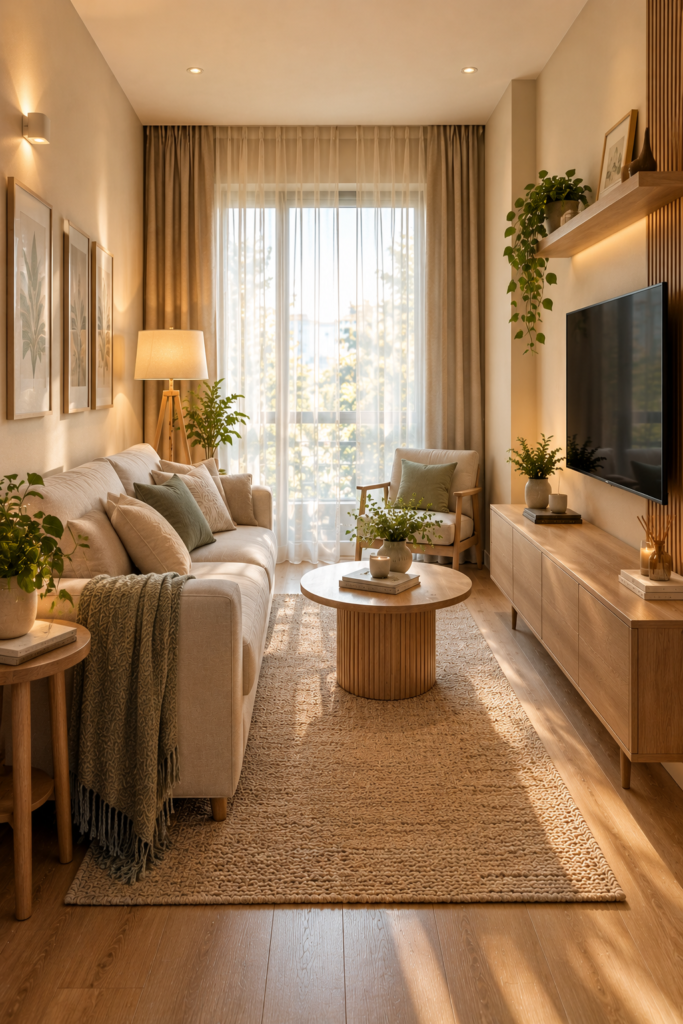
Walls provide valuable decorating space without using up the floor area. Thoughtfully chosen mirrors, artwork, and floating shelves can give a small living room personality while maintaining a clean appearance.
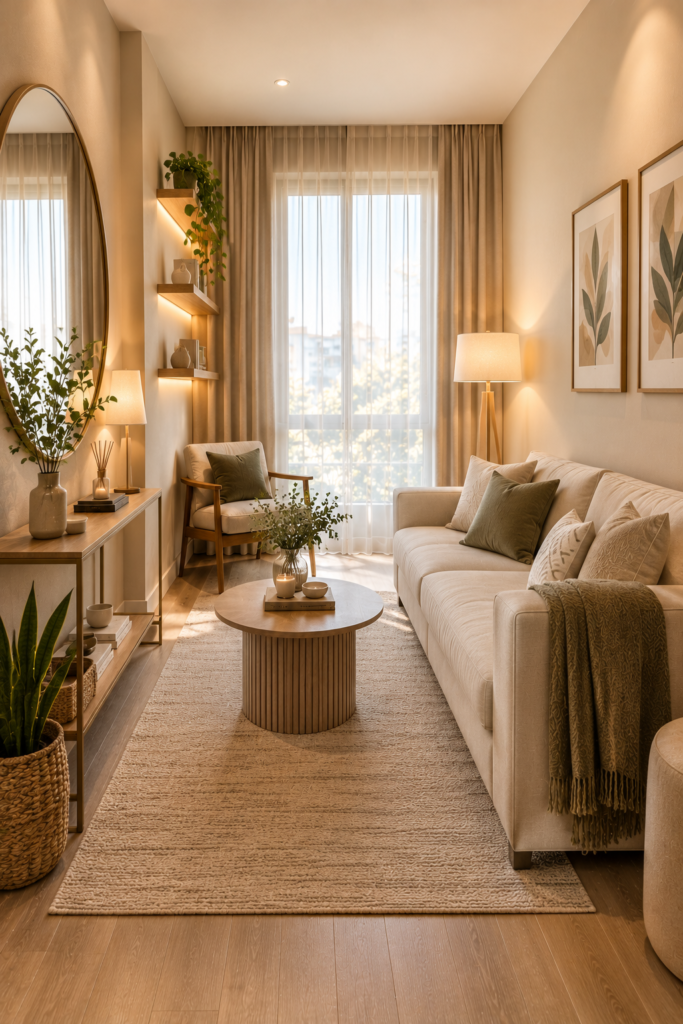
A large mirror is particularly useful because it reflects light and creates a sense of depth. Consider placing it opposite or near a window to reflect daylight. A round mirror above a console table can also become an attractive focal point.
Artwork can add character without overwhelming the room. Instead of covering every wall with small frames, choose one statement piece or a coordinated group of prints. Keep the colors connected to the rest of your interior.
Floating shelves offer another practical solution. They can display a few books, small plants, framed photographs, or decorative objects without requiring a full-size bookcase.
Remember that wall decor should complement the room rather than compete with the furniture. Leaving some areas of the wall empty can make the entire space feel calmer.
Wall decorating tips:
- Use a mirror to reflect available natural light.
- Choose artwork that complements your color palette.
- Install floating shelves for lightweight decorative items.
- Display a few meaningful objects rather than many small accessories.
- Keep wall arrangements proportional to the size of the room.
With the right balance, even a simple wall can become an attractive feature of your living room.
6. Use Rugs, Cushions, and Plants Wisely
Accessories make a living room feel personal, but too many decorative items can quickly create clutter. The best approach is to select a few pieces that add comfort, texture, and color without overwhelming the available space.
Start with cushions and a throw blanket. These are easy to change and can refresh the appearance of your sofa without requiring new furniture. Choose fabrics that complement each other, such as linen, cotton, wool, or subtle woven textures.
A well-sized area rug can anchor the seating arrangement and make the room feel more cohesive. Avoid a rug that is so small it appears disconnected from the furniture. Ideally, it should visually connect the main seating pieces.
Plants add natural color and soften modern interiors. If you have limited floor space, use a small plant on a shelf, a compact side table, or a narrow plant stand. Select varieties suitable for the available light and your ability to care for them.
Storage is equally important. Baskets, decorative boxes, and closed cabinets can keep remotes, magazines, cables, and other everyday items out of sight.
Easy ways to finish the room:
- Add two or three coordinated cushions.
- Use a textured throw to make the sofa more inviting.
- Choose an appropriately sized area rug.
- Introduce one or two plants.
- Keep tabletops and shelves relatively uncluttered.
The key is to create a space that feels lived-in and welcoming without making it difficult to relax or move around.
7. Make Use of Vertical Space
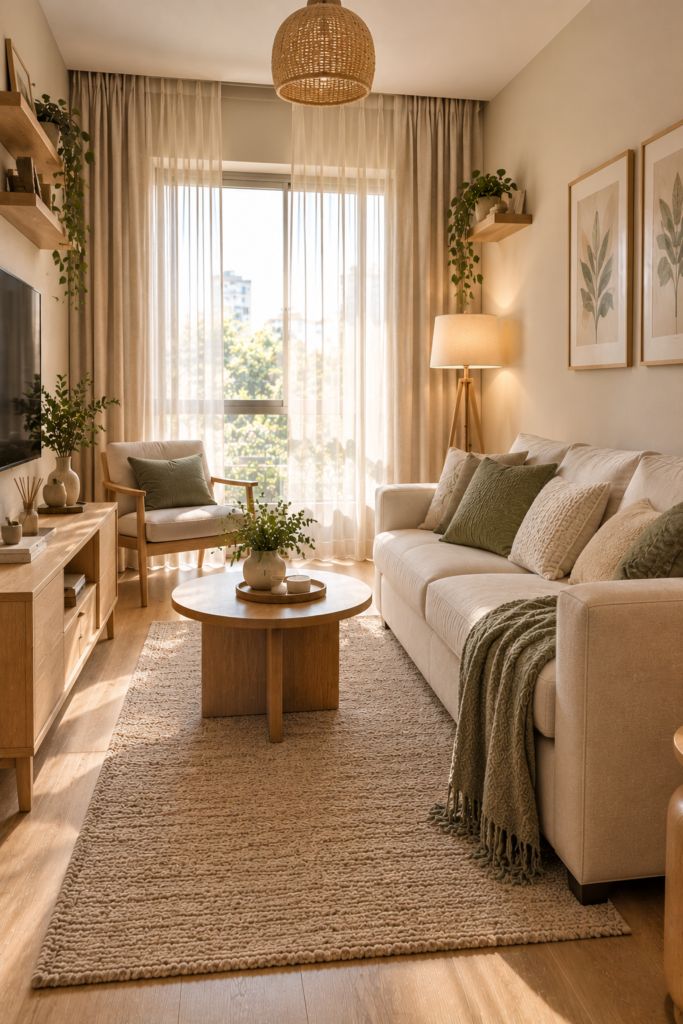
When floor space is limited, look upward. Vertical storage and carefully arranged wall features can help you organize your belongings without filling the room with additional furniture.
Tall, narrow shelving can provide storage for books and decorative pieces while using less floor space than a wide cabinet. Wall-mounted shelves are useful for displaying lightweight items, while hooks can help organize accessories in suitable areas.
Curtain placement can also affect how tall a room appears. Hanging curtains close to the ceiling and allowing them to fall toward the floor can create a more elongated visual effect. Choose a curtain width that provides enough fullness without making the window area look heavy.
If you use a tall bookcase, avoid filling every shelf. A mixture of books, small decorative pieces, and empty space looks more organized than a shelf packed with unrelated objects.
Practical vertical decorating ideas:
- Install floating shelves above a desk or console.
- Use tall, narrow storage where appropriate.
- Hang curtains higher to emphasize room height.
- Keep shelves organized and visually balanced.
- Secure tall furniture safely according to the manufacturer’s instructions.
Using vertical space effectively helps reduce clutter and gives your living room more room to function.
8. Keep the Room Organized with Hidden Storage
Clutter can make even a well-designed living room feel smaller. Everyday objects such as chargers, remote controls, magazines, toys, and blankets often accumulate on tables and sofas. Giving these items a designated place helps the room stay tidy.
Choose storage that works with your furniture. A coffee table with a shelf, a storage ottoman, or a compact cabinet can hide items while keeping them accessible. Decorative baskets are useful for blankets and magazines, especially when placed beside the sofa.
Make a habit of clearing surfaces regularly. You do not need to remove every accessory, but leaving some open space on coffee tables, shelves, and consoles makes the room appear more organized.
If your living room doubles as a workspace, use a small storage box or drawer organizer to keep work supplies separate from your relaxing area.
Simple organization habits:
- Store blankets in a basket or ottoman.
- Keep remote controls in a small tray.
- Use closed storage for items you do not display.
- Avoid storing unnecessary objects on the floor.
- Spend a few minutes each day returning items to their proper places.
An organized room is easier to maintain and more enjoyable to use, regardless of its size.
Common Small Living Room Decorating Mistakes
When decorating a compact living room, a few common mistakes can make the space feel less comfortable. Avoiding them will help you create a more balanced and practical interior.
Choosing oversized furniture: Large sofas and bulky tables can dominate a small room. Always consider the dimensions of the furniture and the available walking space.
Using too many colors and patterns: Several competing patterns can make the room look busy. Start with a simple palette and introduce contrast through a few accessories.
Blocking windows: Tall furniture and heavy curtains can reduce natural light. Keep window areas as open as possible.
Overdecorating shelves: Too many decorative objects can create visual clutter. Display only the pieces that contribute to the room’s style.
Ignoring storage: Everyday items left on visible surfaces make the room look untidy. Add practical storage before buying more accessories.
Following trends without considering your needs: A popular decorating style may not work for your particular layout. Choose ideas that suit your room dimensions, budget, and daily routine.
Final Thoughts
The best small living room decorating ideas focus on making your space functional, comfortable, and visually balanced. Compact furniture, coordinated colors, smart layouts, layered lighting, mirrors, and thoughtful accessories can all help a small room feel more open.
You do not have to change everything at once. Start by rearranging your furniture, improving the lighting, or removing unnecessary clutter. Then introduce storage solutions and decorative details that suit your style.
With a little planning, even a small living room can become a beautiful place to relax, spend time with family, and welcome guests.
1 thought on “Small Living Room Decorating Ideas”