

Storage space is a perennial challenge in modern homes, especially as rooms become more compact and clutter accumulates quickly. When your closets are full and your floor space is completely occupied, looking upward is the smartest design move you can make. Exploring clever DIY floating shelf ideas for extra storage allows you to unlock vertical real estate, display your favorite decor, and organize everyday items without crowding your rooms.
From hidden-bracket solid wood ledges to clever corner organizers and live-edge slabs, crafting your own wall storage yields custom results at a fraction of retail prices. Here are 14 evergreen DIY strategies to build functional, high-end floating shelves.
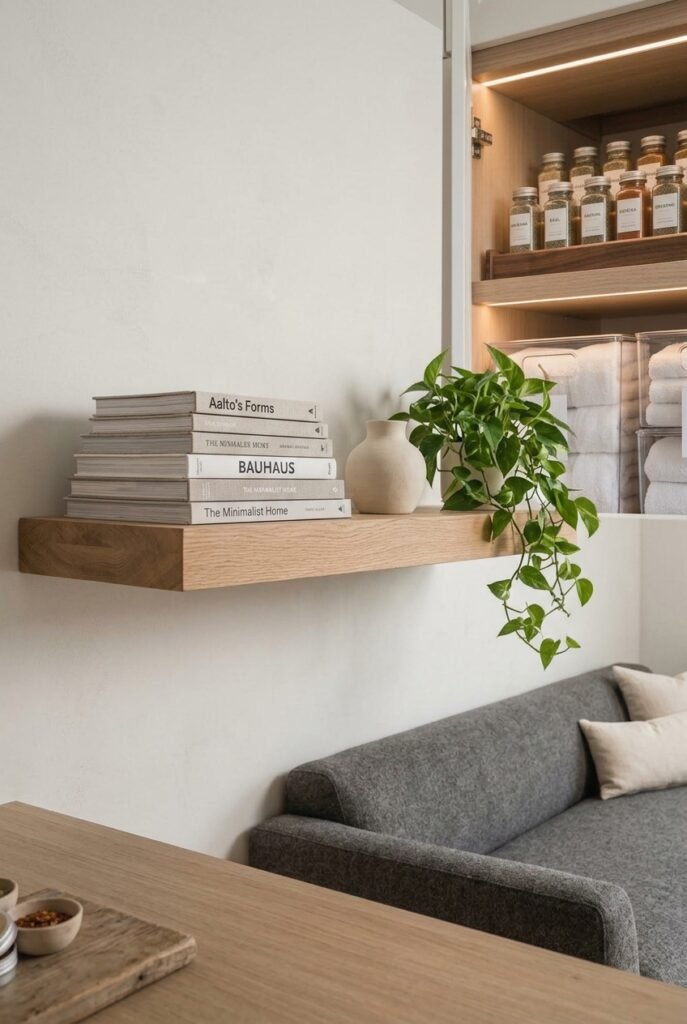
1. Build Hollow Box Floating Shelves with Hidden Cleats
Heavy solid wood boards can add unnecessary weight to your walls and require complicated hardware installations.
Construct a lightweight hollow box shelf using thin plywood panels and secure a sturdy wooden support cleat directly into your wall studs. Slide the hollow box snugly over the cleat and secure it from underneath with small finish nails.
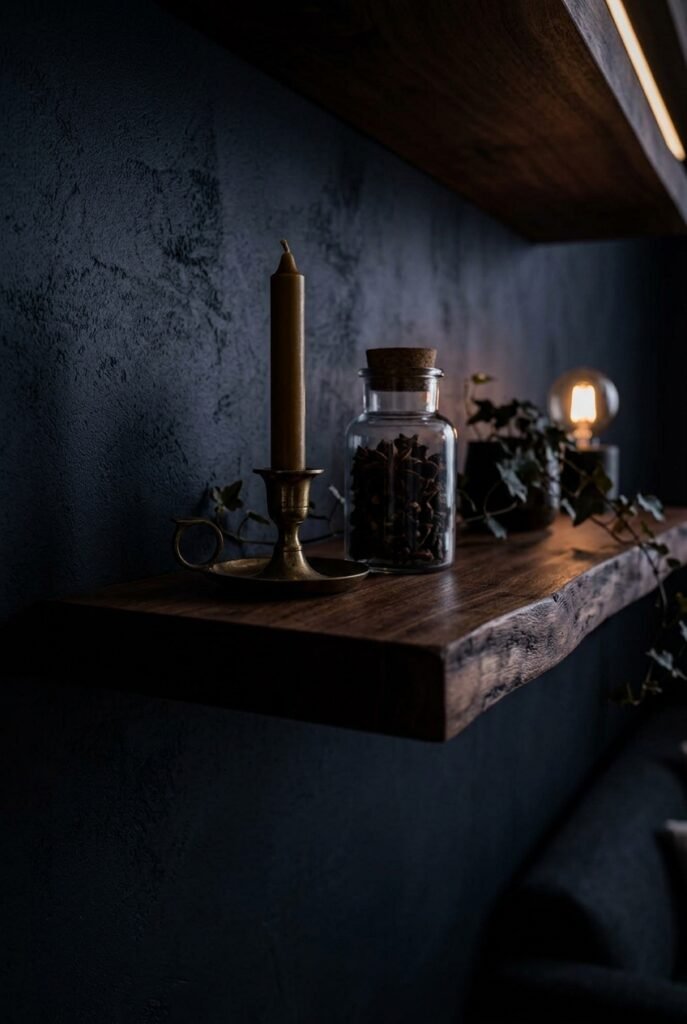
2. Install Live-Edge Slabs for Organic Industrial Style
Mass-market retail shelving often looks sterile and uniform, lacking the unique character of raw organic materials.
Source a raw live-edge wood slab from a local sawmill, sand it down smoothly, apply a protective matte polyurethane finish, and mount it using heavy-duty concealed steel rod brackets hidden inside drilled back-holes.
3. Maximize Dead Corners with Custom L-Shaped Floating Shelves
Standard straight shelves leave awkward wall corners completely bare and underutilized for storage.
Cut two matching wooden boards at 45-degree miter angles to join seamlessly in the corner, creating an L-shaped floating shelf that wraps around your wall to double your surface storage capacity.
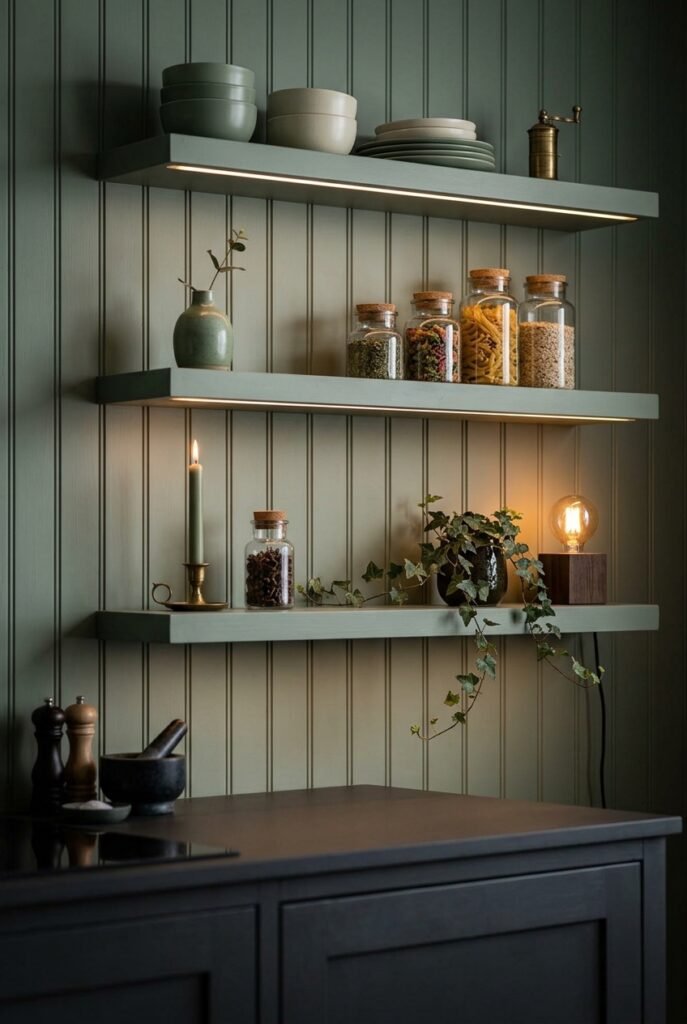
4. Paint Floating Shelves to Match Your Wall Color
Visible shelving brackets and contrasting wood tones can sometimes make a small wall look busy and cluttered.
Mount simple wooden boards and paint them in the exact same matte paint color as your drywall. The shelves will appear to melt into the wall, creating a clean, seamless illusion.
5. Use Industrial Iron Pipes for Heavy-Duty Book Storage
If you need your floating shelves to hold heavy loads like cookbooks or large binders, standard concealed pins may sag.
Mount sturdy black iron threaded pipes directly into wall studs and rest thick reclaimed scaffolding planks across them for an industrial-chic open bookshelf system.
6. Craft Slim Picture Ledges for Tight Hallways
Deep shelves stick out too far in narrow hallways or small bathrooms, creating constant bumping hazards.
Build ultra-slim floating picture ledges with a small front lip using narrow pine trim boards. They take up less than four inches of depth while securely holding frames, spices, or small jars.
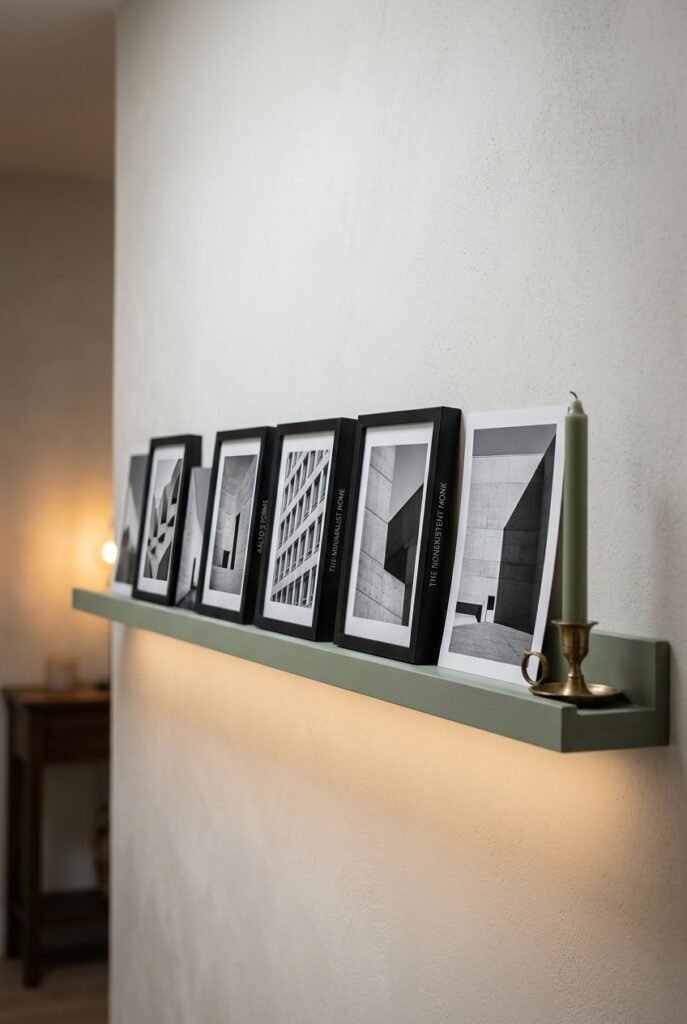
7. Integrate Under-Shelf LED Strip Lighting for Ambiance
Dark corners and shadowed lower surfaces can make open shelving look heavy and uninviting in the evenings.
Route a shallow groove along the bottom edge of your wooden floating shelf and install a low-profile warm LED strip light, casting a gorgeous soft glow over the space below.
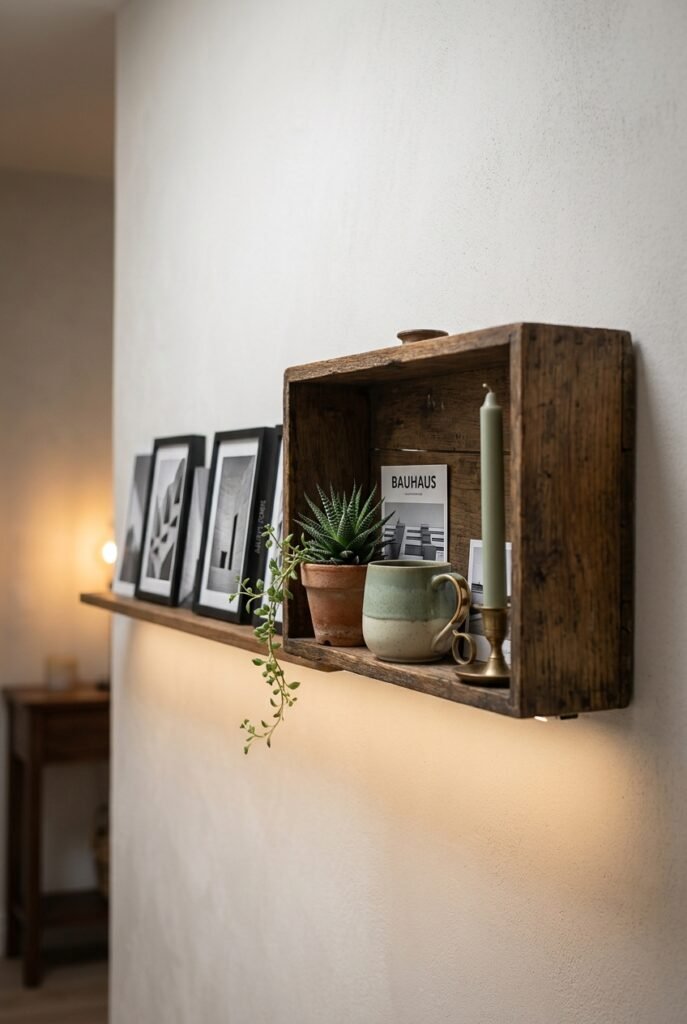
8. Repurpose Vintage Drawer Fronts into Unique Wall Shelves
Old wooden dressers and cabinets destined for the landfill often feature charming drawer boxes with built-in character.
Remove a shallow vintage drawer, mount a sturdy hanging bracket to the back panel, and anchor it securely to the wall. The open drawer box acts as a built-in tray shelf with natural side guards.
9. Hang Floating Glass Shelves for an Airy Bathroom Aesthetic
Heavy wooden shelves can visually crowd a small bathroom or tight powder room, making the space feel cramped.
Mount tempered glass shelves using sleek chrome or matte black clips. The transparent glass allows light to pass right through, creating weightless storage for toiletries.
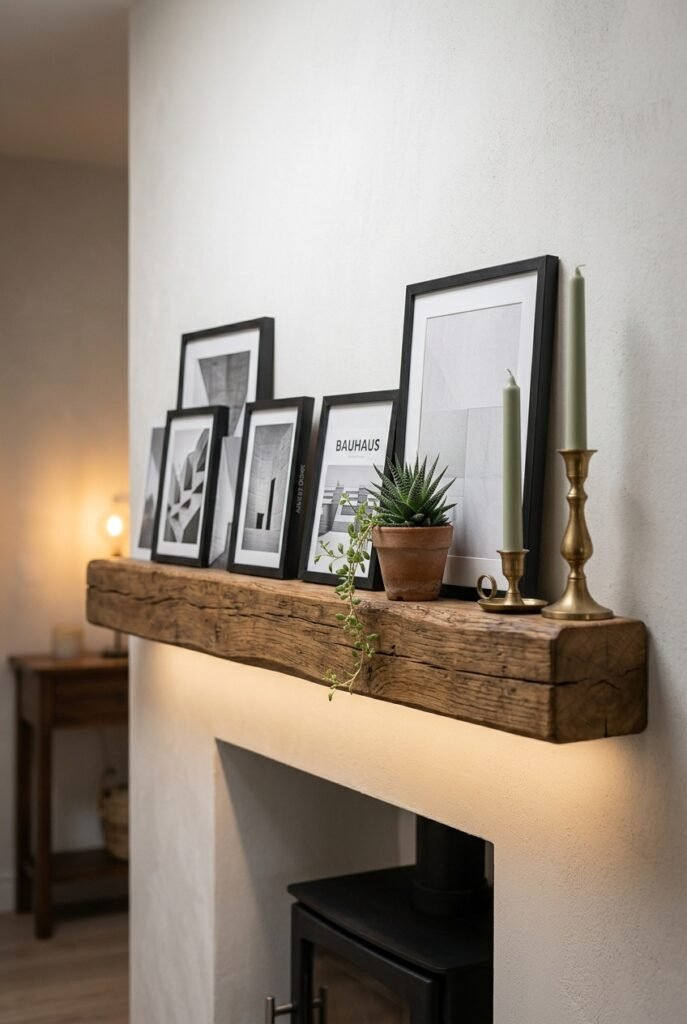
10. Build Thick Chunky Floating Mantels Above Fireplaces
A flimsy, thin mantel can make a living room fireplace look dated and disproportionate to the rest of the room.
Construct a heavy, chunky box-style floating mantel using mitered pine boards stained in a rich espresso or warm honey tone to anchor your living room’s main architectural focal point.
11. Stack Multiple Short Shelves in a Balanced Vertical Column
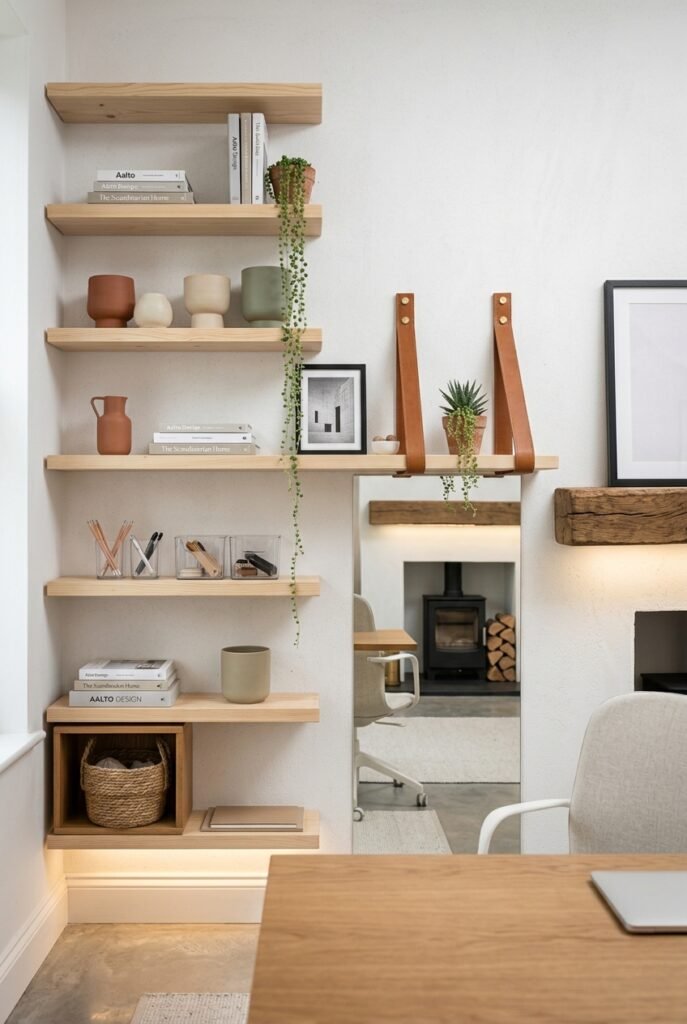
Instead of installing one long, overwhelming shelf across an entire wall, break up the space with vertical symmetry.
Mount three or four short floating shelves directly on top of each other in a neat vertical column, creating compact storage tiers for books, plants, or decorative objects.
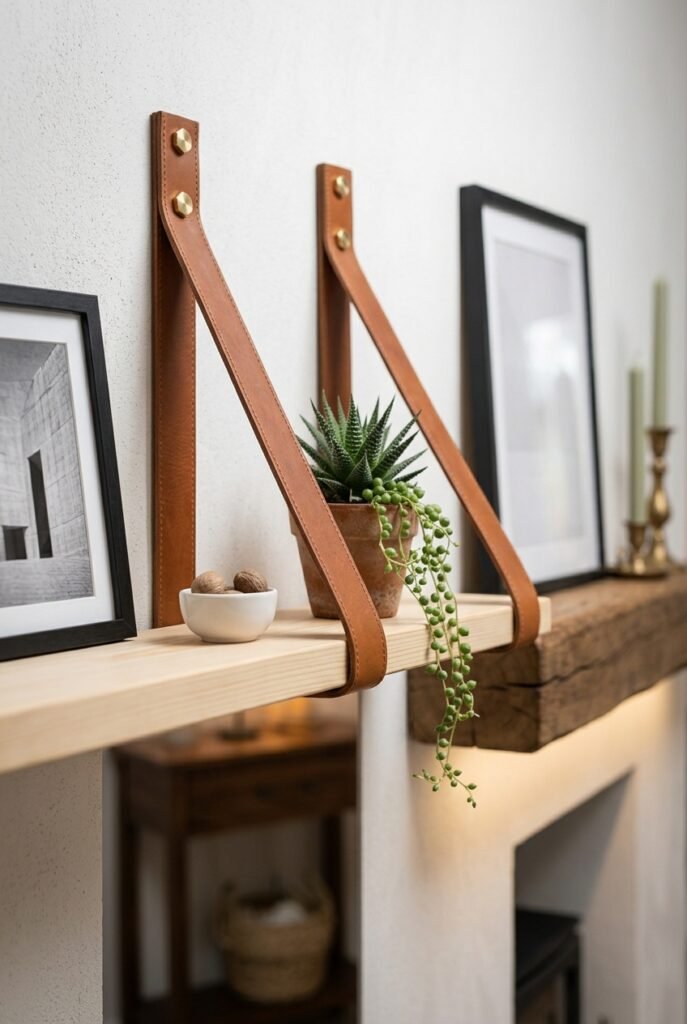
12. Add Leather Straps for a Modern Boho Floating Shelf
If you want the look of floating shelving without drilling complex internal metal brackets into your wall studs, try flexible suspension.
Suspend a smooth wooden board using two heavy-duty loops of genuine leather or raw canvas straps screwed securely into a single wall anchor.
13. Anchor Shelves Directly into Wall Studs for Maximum Weight
The biggest mistake in DIY shelving is relying solely on plastic drywall anchors for heavy storage loads.
Always locate your wooden wall studs using a stud finder and drive your mounting screws directly into the framing to ensure your shelves hold maximum weight safely.
14. Keep Shelving Styles Edited to Prevent Visual Clutter
Open wall storage can quickly descend into visual chaos if every inch of board space is crammed with random items.
Leave plenty of negative space on your floating shelves, grouping items into balanced triangles of varying heights and textures for an upscale, curated look.
Frequently Asked Questions
How much weight can DIY floating shelves hold?
When mounted securely directly into wooden wall studs using heavy-duty internal steel brackets or sturdy cleats, DIY floating shelves can easily hold anywhere from 30 to 50 pounds or more depending on the board thickness.
What is the best wood to use for building floating shelves?
Hardwoods like oak, walnut, and maple offer incredible strength and durability, while lightweight pine or plywood works best if you are building hollow box shelves that need to be light and easy to mount.
Final Thoughts
Implementing smart DIY floating shelf ideas for extra storage proves that expanding your home’s storage capacity is entirely achievable with basic tools and weekend crafting. By utilizing hidden brackets, live-edge wood, clever corner configurations, and edited styling, you can transform empty walls into functional, high-end storage masterpieces.